
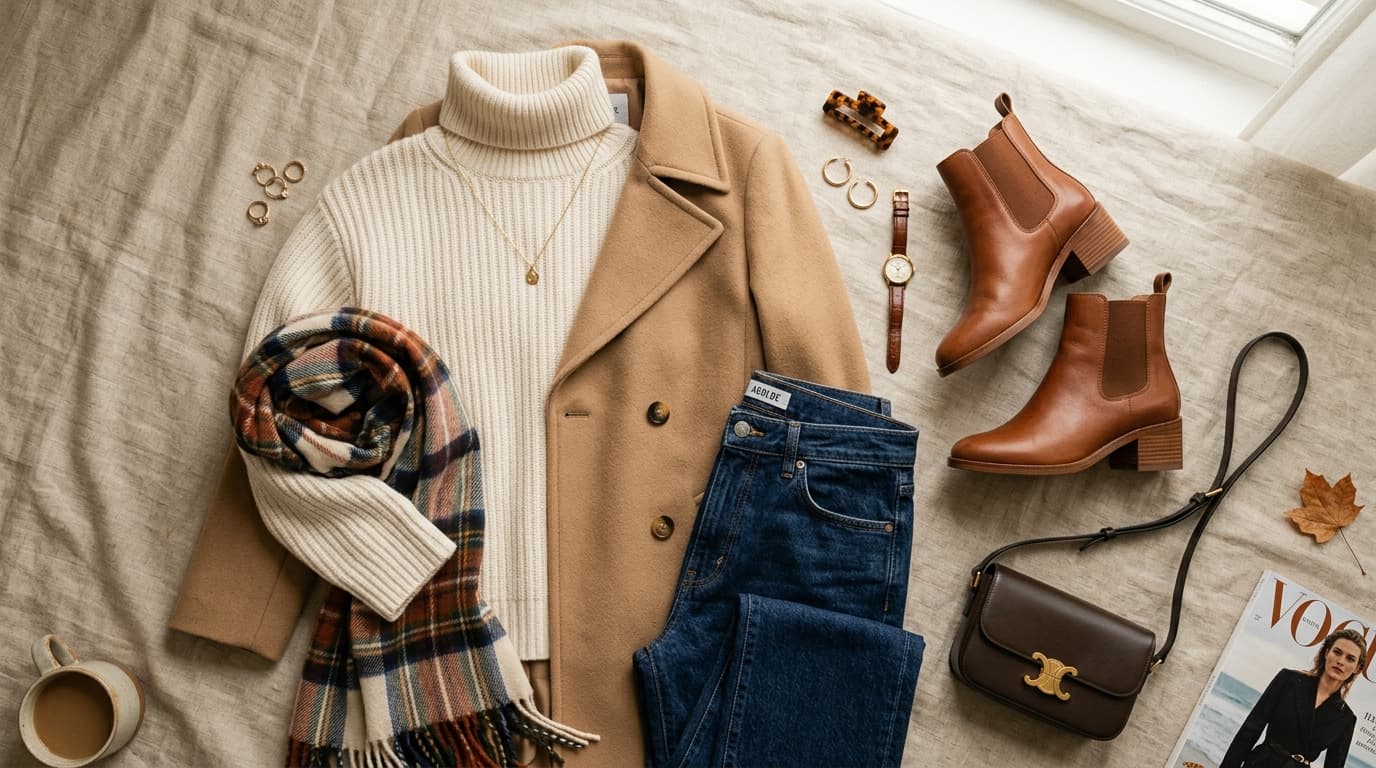
Fall asks more of an outfit than summer or winter do. A single day can run from cold morning to warm afternoon to cold evening, and one fixed outfit has to survive all three.
That constraint is also what makes autumn the most interesting season to dress for. Layering turns a small number of pieces into a large number of outfits, and the season's fabrics and colors do a lot of the work for you.
This guide covers the pieces worth owning, outfit ideas for everyday and for occasions, how to layer properly, and how to finish a fall look with accessories.
TL;DR
Build fall outfits around a layering system: a light base, a mid layer for warmth, and an outer layer you can remove. Lean on denim, knits, boots, and a neutral palette with one seasonal accent. Slidez lets you try fall looks on virtually before you buy, so you can see how layers sit on your own body.
Why Fall Is the Perfect Season to Experiment With Outfits
Fall gives you more outfit combinations than any other season, because layering multiplies what a fixed set of clothes can produce.
In summer, an outfit is usually one or two pieces. In fall, it is three or four, and each one can be swapped independently. A single pair of jeans and a single pair of boots can anchor a dozen different looks depending on what goes above them.
The season also forgives experimentation. A layer that does not work can come off. A combination that feels like a stretch is less exposed under a jacket. There is more room to test things than in a season where the whole outfit is visible at once.
Why fall rewards experimenting:
- Combinations multiply: three tops, two mid layers, and two jackets produce far more outfits than seven separate summer pieces
- Texture becomes available: knits, suede, corduroy, denim, and wool all read well together in a way lighter seasons do not allow
- The palette is cohesive: autumn colors tend to coordinate with each other by default, which lowers the risk of a clash
- Layers hide the stakes: a piece you are unsure about is easier to try when it is one element of four
For more on building looks that coordinate reliably, see our guide on how to match clothes like a professional stylist.
Essential Clothing Pieces for Women's Fall Outfits
A functional fall wardrobe needs fewer pieces than most people expect, as long as each one layers cleanly with the rest.
The goal is not a large closet. It is a set of pieces that combine in multiple directions, which means favoring simple cuts and a tight color range over statement items that only work one way.
Base layers
- Fitted long-sleeve tops and thin knits: the foundation of most fall outfits, worn alone indoors or under everything else
- Simple tees: still useful in early fall and under open shirts or cardigans
- A turtleneck or mock neck: adds warmth at the neck without bulk, and layers under almost anything
Mid layers
- A chunky or ribbed knit sweater: the workhorse of the season
- An oversized cardigan: easier to remove than a sweater, which matters on variable days
- A flannel or overshirt: functions as both a top and a light layer
Outer layers
- A trench or lightweight coat: covers most of early and mid fall
- A denim or leather jacket: shorter, more casual, pairs with nearly everything
- A wool coat: for the end of the season when temperatures drop properly
Bottoms
- Straight or wide-leg jeans: the most versatile fall bottom
- Tailored trousers: moves a fall outfit toward work or evening instantly
- A midi skirt or dress: works all season with tights and boots underneath
Footwear
- Ankle boots: the single most useful fall shoe
- Knee-high or tall boots: for skirts, dresses, and colder weeks
- Clean sneakers: keeps casual fall outfits from reading too heavy
A useful test for any fall purchase: can it layer over at least two things you own and under at least one? If not, it will be harder to wear than it looks.
For more on choosing pieces around your actual routine rather than an ideal one, see our guide on how to build a wardrobe around your lifestyle.
Fall Outfit Ideas for Casual and Everyday Wear
Everyday fall outfits work best built on a denim or knit base, with one layer that can come off as the day warms up.
These are combinations that handle errands, coffee, school runs, and casual workdays without needing much thought.
The reliable everyday formulas:
- Jeans, knit sweater, ankle boots. The default fall outfit for a reason. Swap the sweater color to change the whole look.
- Midi dress, tights, tall boots, denim jacket. One piece does most of the work; the jacket handles the temperature.
- Wide-leg trousers, fitted turtleneck, sneakers or loafers. Comfortable, slightly sharper than jeans, works for casual offices.
- Tee, oversized cardigan, straight jeans, boots. The easiest layering formula to remove pieces from as the day changes.
- Flannel or overshirt over a fitted tee, with jeans. Casual, textural, and the overshirt doubles as a light jacket.
- Leggings or slim jeans, long knit, long coat, ankle boots. Longer proportions on top, which reads deliberate rather than thrown together.
- Skirt, tucked knit, opaque tights, loafers. A polished everyday option that still feels seasonal.
The adjustment that makes most of these work is tucking. A front tuck or full tuck defines the waist under a long layer, which stops layered outfits from reading shapeless.
Fall Outfit Ideas for Work, Dates, and Special Occasions
The same fall pieces move between contexts by changing the formality of the layer and the shoe, not the whole outfit.
Work and professional settings
- Tailored trousers, fine-knit sweater, long coat, loafers or ankle boots: polished without a blazer
- Midi skirt, tucked turtleneck, structured coat: reads formal while staying warm
- Blazer layered over a thin knit, with straight-leg trousers: the layer itself does the formality work
- A knit dress with tights and a tailored coat: one decision, appropriate for most offices
Date nights
- Leather jacket, simple dress, ankle boots: the contrast between soft and structured is what makes it work
- Dark jeans, silky or fitted top, heeled boots, long coat: dressed up without being formal
- Monochrome layers in one color family, which photographs well and reads intentional
Weddings, events, and dressier occasions
- A midi or long dress in a seasonal fabric (velvet, crepe, heavier satin) with a tailored coat rather than a casual jacket
- A suit in a fall tone, which is increasingly common at autumn events and more comfortable than a dress in cold weather
- Closed-toe heels or dressy boots, which suit the season better than sandals
The key difference between a casual and a dressy fall outfit is usually the outer layer. A denim jacket over a dress makes it casual; a tailored wool coat over the same dress makes it occasion-appropriate.
For dress codes by event type specifically, see our guide on what to wear for every occasion.
How to Layer Clothes for Stylish Fall Outfits
Layer with three complementary functions: a base layer close to the skin, a mid layer for insulation, and an outer layer that blocks wind and comes off easily.
This structure comes from how layered clothing actually regulates temperature. As textile researchers Nils-Krister Persson and Anna-Carin Jonsson outline in the Nordic Textile Journal, a practical layering system combines three functions: a base layer that manages moisture near the skin, a mid layer that traps relatively still air to slow heat loss, and an outer layer that protects against wind and rain. Much of the insulation comes from air held within and between the layers.
It matters in fall specifically because the temperature swing across a single day is wide. A system you can remove pieces from handles that better than one heavy garment.
The layering rules that keep it looking intentional:
Go thin to thick, inside to outside. Bulk closest to the skin makes everything above it sit badly. Start with the slimmest piece.
Vary the lengths. Layers that all end at the same point create a solid horizontal block. Let a shirt hem sit below a sweater, or a coat run longer than everything beneath it.
Keep one layer fitted. If every layer is loose, the outfit loses its shape. At least one piece, usually the base, should follow the body.
Mix textures, not patterns. A ribbed knit over a smooth shirt under a wool coat is interesting without competing. Three patterns at once rarely is.
Choose fabrics that work when layered. As textile research in the Journal of Natural Fibers demonstrates, wool absorbs more water vapour within its fibres than cotton and can remain relatively comfortable when damp. It still loses insulation as it becomes wetter, so "warm when wet" does not mean it performs as well soaked as dry. Warmth also depends on fabric thickness, construction, and how much moisture it contains.
Keep the palette tight. Two or three colors across all layers, usually neutrals plus one accent, keeps a four-piece outfit from looking busy.
For choosing colors that work together across layers, see our guide on what colors go together in an outfit.
How to Accessorize Your Fall Outfits
Fall accessories should add warmth or texture, and only one should be doing the attention-grabbing.
The season's accessories are more functional than summer's, which makes them easier to justify but also easier to overdo. A scarf, a hat, a bag, and statement jewelry all at once is where fall outfits tip into costume.
Scarves. The most useful fall accessory and the one that changes an outfit most. A chunky knit scarf adds visible volume; a thin silk or wool one adds color without bulk. Draped, looped, or tucked under a coat collar all read differently.
Hats. A beret, a wool fedora, or a simple beanie each set a different tone. A hat is usually enough on its own as the outfit's focal point.
Belts. Worth more in fall than any other season, because they define a waist that layers otherwise hide. A belt over a coat or a long cardigan is one of the easiest ways to stop a layered outfit from reading shapeless.
Bags. Fall suits structured leather and suede in deeper tones. A crossbody works with coats better than a shoulder bag, which competes with the layers.
Jewelry. Gold and warmer metals tend to suit autumn palettes. With a turtleneck or high neckline, longer pendants work better than short ones.
Tights and socks. Opaque tights extend skirts and dresses through the season, and visible socks above ankle boots are a deliberate styling choice rather than an accident.
The simplest rule: pick one accessory to be noticeable and keep the rest quiet.
How AI Can Help You Plan Fall Outfits
AI styling tools help most in fall because layered outfits have more variables, and seeing the combination before you commit to it saves the most time.
A layered look is harder to picture than a single-piece outfit. Whether a coat length works over a midi skirt, or whether a sweater reads bulky over a particular top, is difficult to judge from imagination or from a product photo.
Slidez handles this by letting you try layered looks on virtually, on your own body. Its AI stylist analyzes your body type from your photo automatically, so the proportions it suggests account for your frame rather than a model's.
What this is useful for in fall specifically:
- Checking layer proportions: whether a coat length and skirt length work together before buying either
- Testing a seasonal piece against your existing wardrobe: a new jacket is only useful if it works over things you already own
- Building looks from inspiration: import a fall outfit you saved from Pinterest or Instagram and try the pieces on
- Shopping across stores: the Chrome extension works on any online store, which matters when seasonal pieces come from different places
You can save looks and sync them between phone and desktop, which is useful for planning a season's outfits in one sitting rather than deciding each morning.
For more outfit inspiration across occasions, see our guide on AI outfit ideas for every occasion.
Conclusion
Fall outfits come down to a system rather than a list. Build around a base, a mid layer, and an outer layer, vary your lengths and textures, keep the palette tight, and let one accessory lead.
A small set of pieces (jeans, a few knits, a coat, good boots) produces most of the season's outfits once you start layering them deliberately.
Slidez makes the planning part easier. Try fall looks on virtually, check how layers sit on your own body, and confirm a seasonal piece works with your wardrobe before buying. The free version includes all core features.
Ready to plan your fall outfits? 👉 Download Slidez free.
Frequently Asked Questions (FAQs)
What are the best fall outfit ideas for women?
The most reliable fall outfits are built on a simple base with one removable layer: jeans with a knit sweater and ankle boots, a midi dress with tights and a denim jacket, or wide-leg trousers with a fitted turtleneck.
These work because each piece can be swapped independently, so a small number of items produces a large number of looks. Slidez can show you how these combinations look on your own body before you buy any of them.
What should women wear during fall?
Dress in layers you can remove as the day warms up. A thin base layer, a knit or cardigan for warmth, and a jacket or coat on top covers most fall weather without needing a different outfit for each temperature.
Denim, knitwear, boots, and a neutral palette with one seasonal accent color handle the majority of autumn days across casual and work settings.
What clothes are essential for a fall wardrobe?
The core set is straight or wide-leg jeans, a few knit sweaters, a turtleneck, an oversized cardigan, a trench or lightweight coat, a denim or leather jacket, ankle boots, and tall boots.
Add tailored trousers and a midi dress or skirt if you need work or occasion options. A useful test for any addition: it should layer over at least two things you own and under at least one.
How do you create cute fall outfits?
Focus on texture and proportion rather than adding more pieces. A ribbed knit over a smooth shirt under a wool coat creates visual interest without competing patterns.
Vary your layer lengths so they do not all end at the same point, keep at least one layer fitted so the outfit holds its shape, and use a belt to define the waist if layers are hiding it.
How do you layer clothes for fall weather?
Use three complementary layers: a thin base layer against the skin, a mid layer like a sweater or cardigan for warmth, and an outer layer that blocks wind and comes off easily.
Go thin to thick from the inside out, since bulk close to the skin makes everything above it sit badly. Wool absorbs more water vapour within its fibres than cotton and tends to stay more comfortable when damp, though any fabric loses insulating ability as it becomes saturated.
What shoes go best with fall outfits?
Ankle boots are the most versatile fall shoe and work with jeans, trousers, skirts, and dresses. Tall boots pair best with skirts, dresses, and colder weather, and clean sneakers keep casual outfits from feeling heavy.
For dressier fall occasions, closed-toe heels or dressy boots suit the season better than sandals, and they hold up to the weather.
Can AI help me create fall outfit combinations?
Yes, and layered outfits are where it helps most, since there are more variables to judge than in a single-piece look.
Slidez lets you try layered fall looks on virtually and factors your body type into its recommendations automatically. You can also import outfits you saved from Pinterest or Instagram and try the pieces on yourself.
Ready to see fall layers on yourself first? 👉 Download Slidez free.
References
- Rethinking Available Production Technologies—The Case of a Thermally Insulating Footwear Concept, Nils-Krister Persson and Anna-Carin Jonsson, Nordic Textile Journal, 2012
- Determining the Optimum Size Combination of Three-Layered Cold Protective Clothing in Varying Wind Conditions and Walking Speeds: Thermal Manikin and 3D Body Scanner Study, Jussila et al., Journal of Fashion Technology & Textile Engineering, February 2015
- Thermal Insulation and Thermal Contact Properties of Wool and Wool/PES Fabrics in Wet State, Engin Akcagun, Monika Bogusławska-Bączek, and Lubos Hes, Journal of Natural Fibers, December 2017
- The Exothermic Effects of Textile Fibers during Changes in Environmental Humidity: A Comparison between ISO:16533 and Dynamic Hot Plate Test Method, Faisal Abedin and Emiel DenHartog, Fibers, May 2023 (Industry-funded: Australian Wool Innovation)
- Microbial Growth on Textiles: Conflicting Conventions (Moisture Regain Equilibrium Values), Mary W. Ballard, North American Textile Conservation Conference, Smithsonian Institution, 2007