
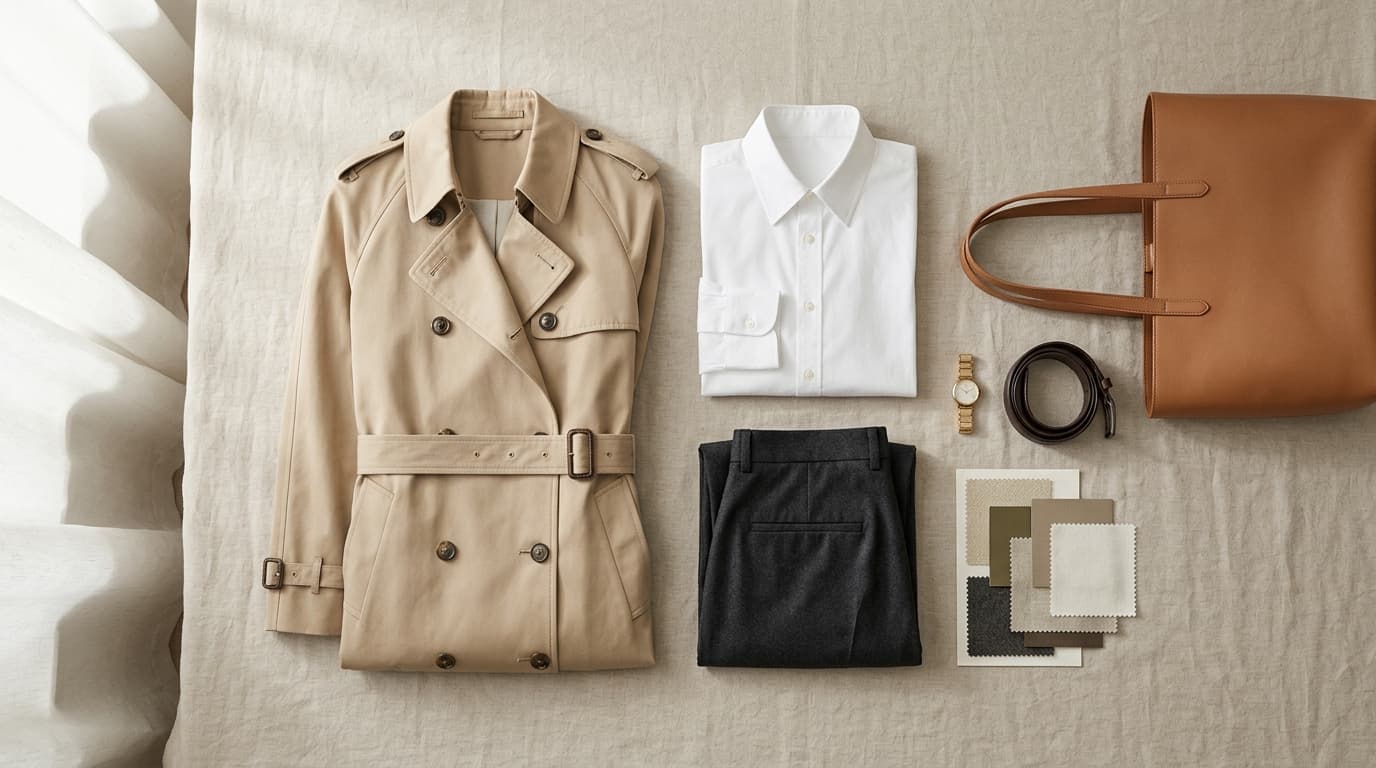
Most people describe their style as “I don't really have one.” Almost none of them are right.
If you have ever put on an outfit and felt instantly more like yourself, or bought something that looked great on a friend and never worn it, you already have a personal style. You just have not named it yet.
This guide is for starting from zero. What personal style actually means, how to find yours through a repeatable process, and what to do with it once you have.
⚡ TL;DR
Personal style is the consistent, recognisable way you express yourself through clothing. You find it by studying what you already wear and love, identifying the patterns, and building outfits around those patterns. Slidez helps by learning your taste as you save and try on looks, so your style becomes visible faster.
What Is Personal Style?
Personal style is the consistent way you express yourself through clothing: the colours, cuts, silhouettes, and combinations you naturally return to, shaped by your taste, your life, and your personality.
The word consistent is doing the work in that definition. Owning clothes is not style. Style is what emerges when your choices start to rhyme with each other.
It is also not the same thing as fashion. Fashion is what is being sold right now. Style is what feels like you regardless of what is being sold.
Someone with strong personal style can wear a ten-year-old jacket and a brand-new pair of shoes and still look coherent, because both connect to the same underlying identity.
Two Things Personal Style Is Not:
It is not about having a lot of clothes. A small, deliberate wardrobe often reads as stronger style than a large, scattered one.
It is not a fixed label you get assigned once. It is a working understanding of your own preferences that sharpens over time.
Why Is Finding Your Personal Style Important?
Knowing your style produces practical benefits well beyond looking put-together.
Shopping becomes faster
When you know what you like, you can walk past most of a store or scroll past most of a feed without a second thought.
You waste less money
Most unworn clothes were bought because they looked good in isolation, not because they fit the buyer's actual style. A wardrobe audit of adults in Flanders, Belgium found that participants owned an average of 169 garments, yet considered only 90 of them, about 53%, genuinely essential to their needs.
Your wardrobe starts to cooperate
Pieces chosen around a consistent style naturally combine into more outfits, because they already share a visual logic.
Getting dressed takes less energy
Fewer, better-aligned options means fewer decisions in the morning. Research by Baumeister et al. shows that repeated choices throughout the day deplete a shared, finite mental resource, so reducing decisions like outfit selection preserves that capacity for later in the day.
Trends become optional
You stop asking whether something is in, and start asking whether it is you.
You feel more like yourself
This is the part that is hard to quantify and easy to notice. Clothes that align with your identity change how you carry them.
How to Find Your Personal Style
This is a process, not a quiz result. It works best done in order.
Study what you already wear
Pull out the five to ten pieces you reach for most. Not the ones you like the idea of, the ones with actual wear on them. These are your honest data.
Look for the patterns
What do those pieces share? Look at colour, fit (structured or relaxed), formality, fabric, and silhouette. Most people find two or three consistent threads they had never consciously named.
Note what you never wear, and why
The unworn pile is just as informative. Too fussy? Wrong colour? Bought for a life you do not have? Each reason tells you something about your boundaries.
Build a visual reference
Save outfits you are drawn to, from anywhere: Pinterest, Instagram, people on the street. After thirty or forty saves, patterns emerge that you could not have articulated up front. Who What Wear recommends this exact approach, noting that a visual mood board reveals recurring aesthetic patterns a person genuinely connects with, separating durable personal style from passing trend impulses.
Separate admiration from suitability
A look can be objectively great and still not be yours. The test is whether you would actually reach for it on a normal Tuesday.
Name it loosely
Give your style a working description. Not to box yourself in, but because a rough label makes shopping decisions faster.
Test and revise
Try outfits within your identified style, notice what feels right, adjust. Style is iterative.
How to Identify the Clothes and Styles You Like
Step four above deserves more detail, because “save things you like” is easy to do badly.
Save widely before you analyse
Collect first, look for patterns second. Analysing too early narrows what you notice.
Save whole outfits, not single items
Individual pieces tell you less than combinations do, because style lives in how things go together.
Ask what specifically appeals
When you save something, note the reason in one or two words: the colour, the proportion, the attitude of it. Vague saves produce vague conclusions.
Include things you already own
Photographing outfits you have actually worn and felt good in gives you the most reliable data of all.
Use tools that learn from this
Slidez lets you import outfits from Pinterest, TikTok, and Instagram and try them on, so you can see whether an admired look actually works on you, and the app builds a picture of your taste from what you save and dismiss as you go. Research in ACM Transactions on Multimedia Computing found that AI systems using implicit signals like saves and dismissals build accurate style profiles that often surface a user's real preferences before the user has consciously named them.
Revisit after a few weeks
Patterns that survive several weeks of saving are real preferences. Ones that vanish were probably a passing mood.
What Are the Different Types of Personal Style?
Style archetypes are shortcuts, not categories you have to fit into. Most people are a blend of two or three, and plenty do not map neatly to any. They are useful mainly as vocabulary for describing what you are drawn to.
Classic
Timeless, tailored, understated. Tailored coats, straight trousers, quality basics, a restrained palette.
Minimalist
Clean lines, few colours, no unnecessary detail. Overlaps with classic but tends toward more modern, simpler shapes.
Casual
Comfort-led and relaxed. Well-fitting denim, knits, clean sneakers, low formality but coordinated.
Streetwear
Sneaker-driven, brand-aware, oversized silhouettes, strong graphic elements.
Romantic
Softer fabrics, flowing shapes, florals, delicate detail, gentler colours.
Edgy
Darker palette, leather, sharper silhouettes, deliberate contrast and hardware.
Bohemian
Layered, textured, earthy tones, pattern mixing, relaxed and unstructured.
Preppy
Collegiate references, structured knits, collared shirts, tidy and traditional.
Sporty
Athletic-influenced, technical fabrics, functional shapes worn off the field.
💡 Style Tip:Do not force yourself into one. “Mostly classic with an edgy streak” is a more useful and more accurate self-description than any single label.
How to Build Outfits Around Your Personal Style
Once you know your style, building outfits becomes a matter of applying it consistently.
Start from your foundations
Identify the handful of pieces that most represent your style. Build outward from those rather than starting fresh each time.
Establish a working palette
Four to six colours that all coordinate covers most needs. A tight palette means most combinations work by default.
Create a few repeatable formulas
Most people with strong style have three or four outfit structures they vary endlessly, not fifty unique looks.
Add one deliberate element
A single considered piece, a texture, a colour, an accessory, is what separates “put together” from “just dressed.”
Check new purchases against your style
Before buying, ask whether the piece fits the patterns you identified. If it does not, it will probably join the unworn pile.
For the full process of applying this when shopping, see our guide on how to choose clothes that match your personal style.
Common Personal Style Mistakes to Avoid
A few predictable mistakes slow the process down.
Waiting to feel “ready”
Style develops through wearing things and noticing your reactions, not through planning before you start.
Copying someone wholesale
Taking inspiration is the point. Replicating an entire person's wardrobe usually produces something that fits neither of you.
Treating the archetype as a cage
The labels above are vocabulary, not rules. Nothing stops a minimalist from owning a bold coat.
Buying a whole new wardrobe at once
Style found through a single shopping spree rarely holds up. Build gradually, from real preferences.
Confusing style with newness
A consistent style often means buying less, not more.
Ignoring your actual life
A style built for a job, climate, or social calendar you do not have will stay in the closet.
Giving up after a few weeks
Personal style is a slow read on your own preferences. The patterns take time to surface.
Conclusion
Personal style is not something you acquire. It is something you notice, then get more deliberate about.
The process is straightforward: study what you already wear and love, find the patterns, collect visual references, name it loosely, and build outfits around it. It takes weeks rather than an afternoon, and it sharpens indefinitely.
Slidez shortens the discovery part. It learns your taste from the looks you save and dismiss, lets you import inspiration from Pinterest, TikTok, and Instagram, and shows outfits on you through virtual try-on so you can test whether something is genuinely yours. The free version includes all core features.
Ready to find your personal style?
Import looks from social media, see them on your body with virtual try-on, and let AI discover your aesthetic.
Download Slidez FreeFrequently Asked Questions
How do I find my personal style?
Start with the clothes you already wear most and feel best in, then look for what they have in common in colour, fit, formality, and silhouette. Those patterns are your existing style, whether or not you have named it. From there, build a visual reference by saving outfits you are drawn to. After thirty or forty saves, consistent themes usually become obvious.
How do I know what clothing style suits me?
A style suits you when you actually reach for it, not just when you admire it on someone else. That is the most reliable test available. Beyond that, fit and coordination matter more than the style category. Something within your preferred aesthetic will still feel wrong if the fit is off, so trying pieces on, physically or virtually, is the practical check.
Can my personal style change over time?
Yes, and it generally should. Style shifts with your lifestyle, your job, where you live, and your own taste maturing. Someone's style at twenty rarely matches their style at forty, and that is normal rather than a failure of consistency. Revisit your style every year or so rather than treating an early conclusion as permanent.
How do I build a wardrobe around my personal style?
Start with the handful of pieces that best represent your style and build outward from them. Establish a working palette of four to six coordinating colours, then add pieces that combine with what you already own. Check every potential purchase against the patterns you identified. If a piece does not fit them, it is likely to go unworn regardless of how appealing it looks on its own.
What are the different types of personal style?
Common archetypes include classic, minimalist, casual, streetwear, romantic, edgy, bohemian, preppy, and sporty. Each describes a cluster of colours, silhouettes, and attitudes rather than a strict rulebook. Most people are a blend of two or three rather than a pure example of one. Treat these as vocabulary for describing what you like, not as categories you need to fit into.
Can AI help me find my personal style?
Yes, mainly by speeding up the pattern-recognition part. AI styling tools learn your preferences from what you save and dismiss, often surfacing consistencies in your taste before you have consciously noticed them yourself. Slidez also lets you import outfits you admire from social media and try them on, so you can test whether an admired look is actually yours before committing to it.
References
- Behind Closed Doors: Examining the Stock of Clothing in Individuals' Wardrobes, Journal of Circular Economy, 2025
- Ego Depletion: Is the Active Self a Limited Resource?, Baumeister et al., Journal of Personality and Social Psychology, 1998
- Building Personal Style, Who What Wear
- Interactive Garment Recommendation with User in the Loop, ACM Transactions on Multimedia Computing, Communications and Applications, December 2024
Recommended Readings
How to Choose Clothes for Your Personal Style
Learn how to choose clothes that match your aesthetic, flatter your body type, and avoid buying pieces you never wear.
How to Dress Better Without Following Trends
Discover how to build timeless outfits and look effortlessly sharp without chasing short-lived fashion hype.
How to Build a Capsule Wardrobe with AI
Use AI styling tools to curate a functional, versatile wardrobe that maximizes every single piece.
How to Choose Clothes That Match Your Skin Tone
Understand undertones, contrast, and color matching to always choose colors that complement your skin tone.