
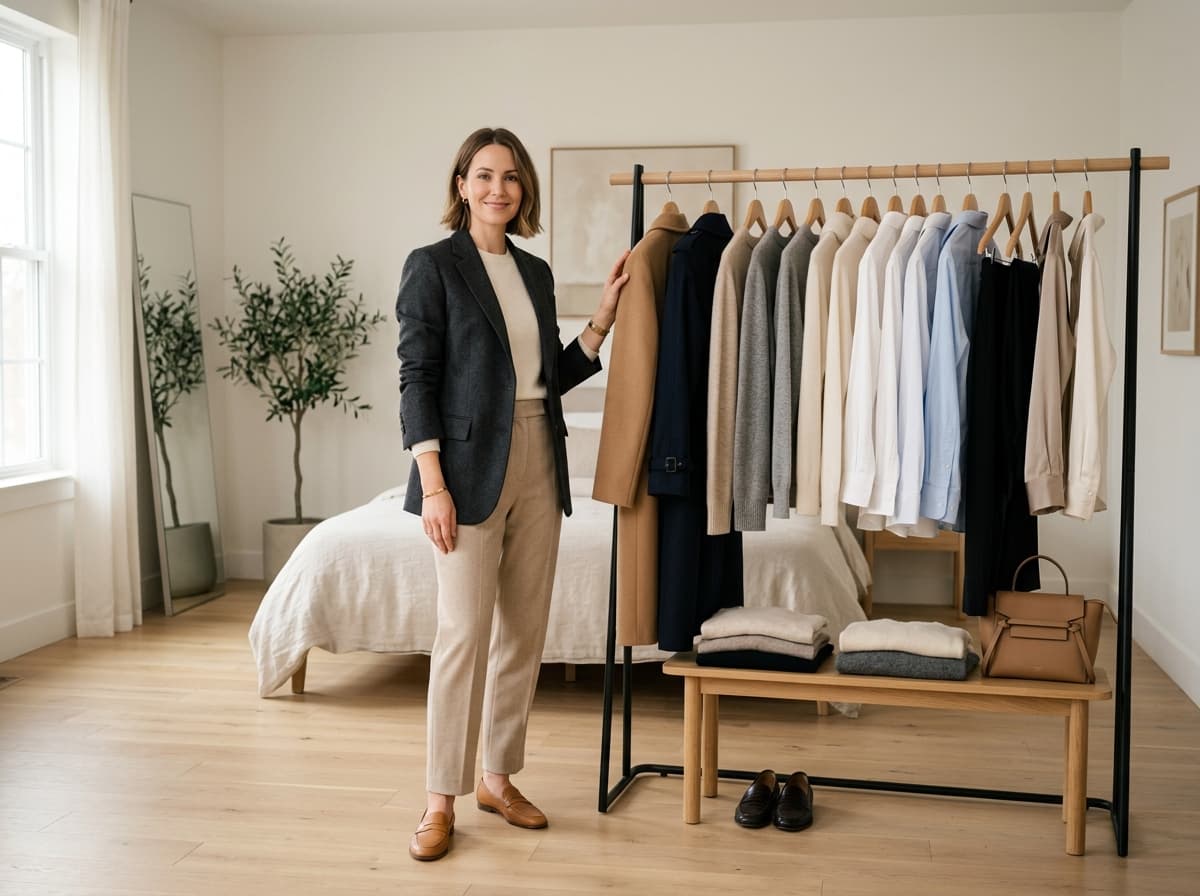
Trends promise an easy shortcut to looking good. Buy the thing everyone is buying, and you will look current.
The shortcut has a cost. Trend cycles move fast enough that the payoff barely lasts, and a wardrobe built entirely from trends rarely coordinates with itself. Dressing well and dressing trendy are related, but they are not the same skill.
This guide is about the first one. What actually makes someone look put-together, independent of what is trending this month, and how to build toward it deliberately.
TL;DR
Dressing better does not require chasing trends. It requires knowing your personal style, investing in fit and quality basics, and building a wardrobe where everything coordinates. Slidez helps by learning your taste and showing outfits on you through virtual try-on, so every addition is deliberate.
Why Following Every Fashion Trend Doesn't Always Work
Trends are not inherently bad. The problem is treating every one of them as a requirement. When you construct your closet exclusively around the latest viral aesthetics, several predictable issues emerge:
1. Trend cycles have accelerated
What used to move over a full season now shifts in weeks, driven by social media's relentless pace. McKinsey's “Need for Speed” research found that consumers now spot, own, and share a trend globally within minutes, compressing supply chains that once took over 40 weeks down to a matter of days. Keeping up has become logistically and financially unsustainable for everyday consumers.
2. Trends rarely coordinate with each other
A wardrobe assembled from six unrelated trends produces six individual outfits, not a functional wardrobe. You end up with a closet full of statement pieces that cannot be mixed or layered together, causing the familiar sensation of having “a closet full of clothes and nothing to wear.”
3. Trend pieces age visibly
A garment tied tightly to a specific micro-moment reads as dated almost as soon as the algorithm pivots to the next aesthetic. What felt cutting-edge in March often looks conspicuously out-of-place by September.
4. It is expensive by design
Constant replacement is the fast-fashion business model, not an accidental side effect. When garments are designed to last only as long as a trend cycle, both quality and longevity suffer, leading to repeated spending with zero cumulative value.
5. It crowds out actual style
Chasing what is popular leaves little room to notice what you actually like or what flatters your specific proportions. You end up adopting someone else's uniform rather than developing your own visual signature.
None of this means you must avoid trends entirely. It simply means treating them as optional seasoning rather than the base of your recipe.
Trend-Chasing vs. Cultivated Personal Style
| Dimension | Trend-Driven Wardrobe | Personal Style Wardrobe |
|---|---|---|
| Buying Trigger | Viral social hype, novelty | Fit, palette harmony, need |
| Lifespan | 1–3 months before feeling dated | 3–5+ years of active rotation |
| Combinability | Low (isolated statement pieces) | High (interchangeable foundations) |
| Daily Stress | High decision fatigue | Effortless, reliable formulas |
How to Define Your Personal Style
Style you can rely on, independent of trend cycles, starts with noticing what you already gravitate toward when nobody is watching or grading you.
Audit what you already wear
The pieces you reach for repeatedly—not the aspirational garments you own but rarely touch—are the most honest evidence of your real taste. Take note of the fabrics, necklines, rises, and cuts that make you feel naturally comfortable and confident.
Look for patterns, not items
Structured or relaxed, bold or muted, classic or unconventional. Most people have a consistent stylistic thread running through their favorites without having consciously named it. Focus on underlying silhouettes and textures rather than individual brand names.
Build a visual reference
Save outfits you are genuinely drawn to until a recurring pattern becomes obvious. Who What Wear notes that a visual mood board lets you identify recurring aesthetic patterns you genuinely connect with, separating durable personal style from fleeting trend impulses.
Separate admiration from suitability
Something can look magnificent on a celebrity, influencer, or mannequin and still not belong in your life. The critical test is whether you would actually reach for it on a regular Tuesday morning, not whether you like how it looks in an editorial shoot.
Let it evolve gracefully
Personal style is not fixed at a single permanent answer. As your lifestyle, career, and tastes shift, revisit your wardrobe periodically rather than treating an early conclusion as rigid doctrine.
For a comprehensive walkthrough of this process, see our complete guide on how to choose clothes that match your personal style, or read our insights on clothing styles for different body types.
Timeless Fashion Tips That Never Go Out of Style
A handful of foundational principles hold up regardless of what aesthetic happens to be trending online:
Fit beats everything
A well-fitting, inexpensive basic consistently outperforms a four-figure designer piece that does not sit right on your shoulders, chest, or waist. Having a local tailor adjust hemlines, sleeve lengths, and trouser tapers is almost always the highest-ROI investment in your wardrobe.
Invest in foundations, experiment with extras
Allocate your budget heavily toward the foundational garments you will wear hundreds of times: structured coats, tailored trousers, high-grade footwear, and durable knitwear. Take risks on inexpensive, fun accessories or accent pieces where trend fatigue carries no real financial penalty.
Build around a coordinated palette
A tight, intentional set of core neutral tones (navy, charcoal, black, cream, beige, olive) that naturally complement each other makes almost any combination within your closet effortlessly succeed. Accent colors become easy to drop in once the core is stable.
Quality shows in the details
Stitching density, natural fabric composition (wool, linen, silk, heavyweight cotton), clean seams, and how a fabric drapes around the body matter far more to how put-together you look than any logo or brand label ever will.
Fewer, better pieces beat more, average ones
A compact wardrobe where every item combines smoothly with three others outperforms a massive closet where most items are isolated orphans. WRAP's research found that the average person leaves about 26% of their wardrobe unworn each year, driven largely by poor combinability rather than dislike, and that curating versatile, combinable pieces is the single most effective way to extend a garment's active life.
Confidence is a visible ingredient
How you carry yourself in an outfit shapes how it reads just as much as the fabric itself. Research on the cognitive consequences of formal clothing published in Social Psychological and Personality Sciencefound that clothing generates an internal sense of power that broadens the wearer's thinking, but the effect depends entirely on whether the garment feels authentic to the person wearing it.
These principles apply whether the current trend leans maximalist, minimalist, or vintage, because they govern fit, proportion, and harmony rather than temporary aesthetics.
How AI Fashion Tools Help You Dress Better Based on Your Style
Modern AI fashion tools excel here because they can apply these styling rules systematically, at a scale and precision that is difficult to maintain manually:
It learns your actual taste over time
Every look you save, favorite, or dismiss teaches the algorithm your true aesthetic preferences, not your idealized ones. Research published in ACM Transactions on Multimedia Computing found that AI systems using implicit behavioral feedback map a user's genuine style significantly more accurately than static models relying on self-reported questionnaires.
It checks coordination before you spend
Knowing whether a new piece pairs effortlessly with at least three garments you already own is the fastest way to prevent another orphan purchase. AI stylists verify cross-item compatibility instantly.
It factors in your body automatically
Slidez analyses your body type directly from your photo during styling, meaning outfit recommendations automatically account for your specific proportions, silhouette balance, and posture without tedious tape measurements or quizzes.
It lets you test trends safely
Curious about a viral aesthetic from Pinterest, TikTok, or Instagram? Import the look into Slidez and try it on virtually against your photo before spending a single dollar. You can immediately judge whether the trend flatters your style or is better left on social feeds.
It replaces guessing with visual proof
Photorealistic virtual try-on replaces speculative guessing with high-fidelity visual evidence. You see exactly how fabrics, colors, and cuts interact with your body before committing.
Slidez brings these advantages together into a cohesive ecosystem: personalized outfit recommendations built around your authentic taste, automated body-aware styling, photorealistic virtual try-on, and a handy Chrome extension that lets you try on clothing across any online store.
For more on building an intentional wardrobe with technology, check out our guide on how to build a capsule wardrobe with AI styling tools, or read our tips on how to stop buying clothes you never wear.
Building Confidence Through Smarter Fashion Choices
True confidence in what you wear is rarely about owning the flashiest clothes. It stems from the certainty behind your decisions:
Certainty comes from verification, not guessing
Seeing an outfit on yourself before leaving the house—or before hitting “checkout”—removes the persistent, low-grade doubt that undermines your posture and presence throughout the day.
Repetition builds trust in your choices
A curated rotation of reliable pieces that consistently combine well eliminates unpleasant wardrobe surprises. Over time, this reliability compounds into effortless, relaxed self-assurance.
Comparison is the real confidence killer, not your closet
Trend-chasing keeps you constantly measuring yourself against a rapidly shifting target created to sell goods. A wardrobe centered on your own authentic aesthetic removes external comparisons entirely.
Smaller, smarter choices compound dramatically
You never need an expensive overnight wardrobe overhaul. Replacing one ill-fitting basic, tailoring a pair of trousers, or addressing one key outfit gap fundamentally improves how your entire collection performs.
Dressing well is rarely about a single transformative purchase. It is the cumulative result of deliberate, informed choices that were genuinely tailored to you.
Conclusion
Dressing better does not require keeping up with every trend. It requires knowing your own style, prioritising fit and coordination over novelty, and building a wardrobe where each piece earns its place.
Trends can still be fun. They just work best as an occasional addition to a foundation that already works, not as the foundation itself.
Slidez supports exactly this approach. It learns your taste, analyses your body during styling, and lets you try anything on, including trends you are curious about, before it becomes part of your wardrobe. The free version includes all core features.
Ready to dress with more certainty?
Stop second-guessing your outfits. Let Slidez learn your taste and try on looks virtually before you buy or style.
Download Slidez AI FreeFrequently Asked Questions (FAQs)
How can I dress better without following fashion trends?
Focus on fit, a coordinated colour palette, and quality basics rather than keeping up with what is currently popular. Knowing your personal style and building a wardrobe where everything combines matters more than owning the latest pieces.
Trends can still be part of your wardrobe. The key is treating them as optional additions rather than the foundation.
What is the best way to find my personal style?
Start by auditing the clothes you already reach for repeatedly, since your real style usually shows up in your actual habits rather than your stated preferences. Save outfits you admire until patterns emerge in colour, cut, and formality.
Tools like Slidez speed this up by learning your taste from what you save and dismiss.
Do I need expensive clothes to dress well?
No. Fit and coordination matter more than price. A well-fitting, affordable basic reads as more put-together than an expensive piece that does not sit right.
Spending strategically, more on foundational pieces worn constantly, less on trend-driven extras, tends to produce better results than spending evenly across everything.
Can AI help me improve my fashion style?
Yes. AI fashion tools learn your taste from your behaviour, check whether new pieces coordinate with your existing wardrobe, and let you see outfits on your own body before committing.
Slidez also lets you safely test trends by importing looks from social media and trying them on virtually, so you can judge whether something suits you before it enters your closet.
What are timeless wardrobe essentials?
Timeless essentials are pieces built on fit and versatility rather than a specific trend: well-fitting basics in your best colours, a couple of quality layering pieces, and shoes that pair with multiple outfits.
The exact items vary by lifestyle, but the principle is consistent. They should combine easily with most of what you own, and still look right in five years.
What is the best AI fashion stylist app?
Slidez is a strong choice for building a personal style outside of trend cycles, since it learns your taste over time, analyses your body automatically, and shows every recommendation through virtual try-on before you commit.
For a full comparison, see our guide to the best AI stylist apps in 2026.
Explore Slidez
What Is an AI Stylist?
Learn how AI styling works and get personalized outfit recommendations for any occasion.
AI Virtual Try-On
See how clothes look on your body before you buy — free on iOS and Android.
AI Outfit Generator
Generate complete outfit ideas instantly based on your style, mood, or occasion.
Try On From Anywhere
Import items from Instagram or any shopping site and try them on virtually.
Recommended Readings
How to Choose Clothes That Match Your Personal Style
A step-by-step guide to discovering your authentic style aesthetic and curating clothes that make you look and feel great.
How to Build a Capsule Wardrobe with AI Styling Tools
Build an interchangeable, versatile wardrobe that maximizes outfit combinations with minimal pieces using AI.
How to Stop Buying Clothes You Never Wear
Break the cycle of impulse buying and build a functional closet where every garment gets worn repeatedly.
Clothing Styles for Different Body Types
Learn how to dress for your specific body proportions with flattering silhouettes, balanced cuts, and modern styling rules.
References
- The Need for Speed: Capturing Today's Fashion Consumer, McKinsey & Company
- Building Personal Style, Who What Wear
- Valuing Our Clothes: The Cost of UK Fashion, WRAP, 2017
- The Cognitive Consequences of Formal Clothing, Social Psychological and Personality Science, May 2015
- Interactive Garment Recommendation with User in the Loop, ACM Transactions on Multimedia Computing, Communications, and Applications, December 2024