
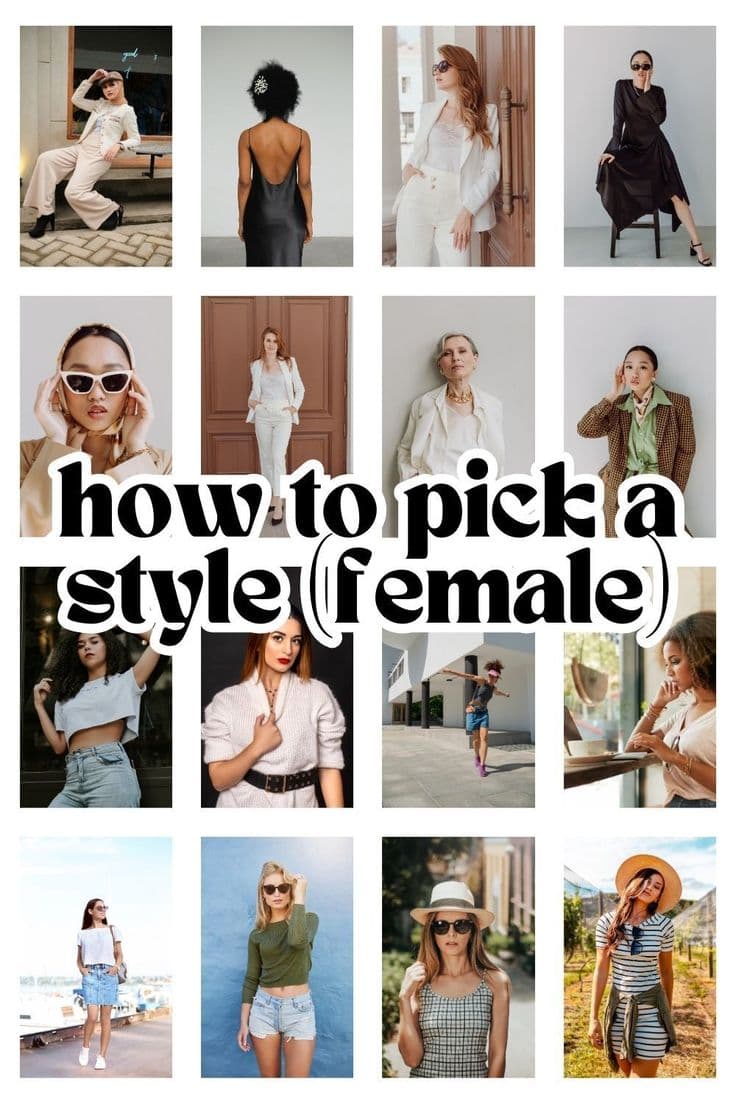
Most people buy clothes that look good on someone else, in a store, in a moment. Then those clothes sit unworn, because they never actually matched who the person is.
Personal style solves that. When you know your style, shopping gets easier, your wardrobe works together, and getting dressed stops feeling like a guess.
This guide walks you through how to identify your personal style, choose colors and cuts that suit you, and build a wardrobe that reflects who you are, not who a trend told you to be.
TL;DR
To choose clothes that match your personal style, identify what you already gravitate toward, understand your colors and proportions, and buy versatile pieces that work together. Tools like Slidez help by learning your taste and showing outfits on you through virtual try-on, so you can see what genuinely fits your style before buying.
What Is Personal Style?
Personal style is the consistent way you express yourself through clothing. It is the set of colors, cuts, silhouettes, and combinations you naturally gravitate toward, shaped by your taste, lifestyle, and personality.
Personal style is not the same as fashion. Fashion is what is trending right now. Style is what feels like you, regardless of trend.
A person with strong personal style can wear something from ten years ago or ten days ago and still look coherent, because it all connects to a consistent identity.
Style is personal by definition. There is no single correct version. The goal is not to copy someone else's style but to understand and refine your own.
Why Understanding Your Personal Style Matters
Knowing your personal style has practical benefits well beyond looking good.
You shop faster and smarter. When you know what suits you, you can walk past 90% of a store without a second thought. Research by Baumeister et al. shows that repeated choices throughout the day deplete mental energy; reducing daily decisions like assembling outfits preserves cognitive capacity for more important tasks.
You waste less money. Most people wear only a fraction of what they own, largely because they buy things that do not fit their real style. ThredUp's 2023 Resale Report shows that a significant majority of consumers acknowledge that large portions of their wardrobes go entirely unworn.
Your wardrobe works together. Pieces chosen around a coherent style naturally combine into more outfits.
You feel more confident. Wearing clothes that feel authentically you has a measurable effect on confidence and even performance. Research on "enclothed cognition" by Adam and Galinsky demonstrates that the physical act of wearing certain clothes carries symbolic meaning that directly impacts psychological processes and cognitive performance.
You stop chasing trends. Trends become optional inspiration rather than pressure. You adopt what fits your style and skip the rest.
Personal style is the foundation that makes every other clothing decision easier.
Common Mistakes People Make When Choosing Clothes
Before the how-to, it helps to know the traps. Most style struggles come from a handful of common mistakes.
Buying for an aspirational life. Purchasing clothes for the person you imagine being (a different job, a different lifestyle) rather than the life you actually live.
Following every trend. Chasing trends leads to a wardrobe of pieces that feel dated fast and rarely connect to each other.
Ignoring fit. A beautiful piece in the wrong size or cut will never look right. Fit matters more than the label or the trend.
Shopping emotionally. Buying to fix a mood, celebrate, or cope with stress leads to impulse purchases that do not fit your style.
Copying someone else entirely. Taking inspiration is good. Copying a whole style that does not suit your body, coloring, or life is not.
Neglecting versatility. Buying standout pieces that only work with one outfit, instead of versatile pieces that combine many ways.
Avoiding these mistakes is half the battle. The rest is a positive process of discovery.
How to Identify Your Personal Style
To identify your personal style, look at what you already wear and love, then find the patterns. Your real style is usually hiding in plain sight, in the clothes you reach for again and again.
Here is a practical process:
1. Audit your favorites. Pull out the pieces you wear most and feel best in. Note what they have in common: colors, cuts, fabrics, formality.
2. Notice your patterns. Most people gravitate toward a consistent aesthetic without realizing it. Structured or flowy? Neutral or bold? Classic or edgy?
3. Build a visual reference. Save outfits you admire from Pinterest, Instagram, or TikTok. After 30 or 40, patterns emerge in what you are drawn to. Byrdie notes that curating a visual mood board of outfits you admire is foundational for style discovery, allowing you to identify recurring silhouettes, colors, and textures that define your aesthetic.
4. Name your style. Loosely categorize it: classic, minimalist, streetwear, romantic, edgy, bohemian, or a blend. The label is just a shortcut, not a cage.
5. Test and refine. Try outfits within your identified style and adjust. Style is iterative, not fixed.
Tools like Slidez accelerate this by learning your taste as you save and try on looks, then recommending outfits that match the patterns it detects.
How Your Body Shape Influences Clothing Choices
Your body shape affects which cuts and silhouettes tend to work with your proportions. It is one input into personal style, not a rulebook, but understanding it helps you choose clothes that fit well and feel balanced.
Different silhouettes interact with different proportions. A cut that feels balanced on one body shape may feel off on another, purely because of how the garment's lines meet the body.
Knowing your proportions helps you filter choices faster. It does not limit what you can wear. It just gives you a starting point for what tends to work, which you can then follow or ignore based on your personal taste.
For a full breakdown, see our guides on the body type calculator and clothing styles for every body type.
Body shape is one lens among several. Your coloring, lifestyle, and personality matter just as much.
How to Choose Colors That Suit You
Color is one of the most powerful and most overlooked elements of personal style.
Understand undertones. Skin has warm, cool, or neutral undertones. Colors that harmonize with your undertone tend to make you look healthier and more vibrant. Vogue documents the modern resurgence of seasonal color analysis, noting that identifying your unique undertones and matching them with a harmonizing color palette can noticeably enhance your natural complexion.
Find your best neutrals. Everyone has neutrals that work better for them. Some suit cool greys and pure white; others suit warm beiges and cream.
Identify your accent colors. A few colors will make you feel great every time you wear them. Build around those.
Test in natural light. Colors look different under store lighting. Check how a color reads in daylight, ideally against your face.
Do not over-restrict. Color analysis is a helpful guide, not a strict rule. If you love a color outside your "palette," wear it. Confidence reads better than any rule.
A coherent color palette is one of the fastest ways to make a wardrobe feel intentional and put-together.
How to Build a Versatile Wardrobe Around Your Style
A versatile wardrobe is built on foundation pieces that combine easily, with a smaller number of personality pieces. The goal is maximum outfits from minimum items.
Start with foundations. Neutral, well-fitting basics in your best colors and cuts. These are the backbone of most outfits.
Add versatile mid-layers. Cardigans, blazers, and jackets that pair with multiple looks.
Choose personality pieces deliberately. A smaller set of standout items that express your style and add interest.
Follow the loose 80/20 rule. Roughly 80% versatile foundations, 20% personality. This keeps your wardrobe both functional and expressive. MasterClass explains that a highly functional wardrobe relies on balance, heavily prioritizing versatile, interchangeable foundations while reserving a smaller portion for unique statement pieces.
Check every purchase for combinations. Before buying, confirm a piece works with at least three things you already own. If it does not combine, it will not get worn.
For more on avoiding wasted purchases, see our guide on how to stop buying clothes you never wear.
A wardrobe built this way means you always have something to wear that feels like you.
How to Choose Clothes for Different Occasions
Personal style flexes across occasions without losing its identity. The trick is keeping your style consistent while adjusting the formality.
Identify your recurring occasions. Work, casual, social, formal, active. Most people have four or five they dress for regularly.
Build a few go-to outfits for each. Pre-planned looks remove the daily guesswork and ensure you are always appropriately dressed.
Translate your style across formality levels. A minimalist can be minimalist at the gym and at a wedding. The style stays; the formality shifts.
Keep versatile occasion pieces. One great blazer, one versatile dress or dress shirt, one pair of smart shoes can cover many occasions.
When your occasion outfits still reflect your personal style, you feel like yourself everywhere, which is the entire point.
How AI Fashion Tools Can Help You Discover Your Personal Style
AI fashion tools help you discover your personal style by learning what you gravitate toward and showing you outfits that match it. They turn the slow process of self-discovery into something faster and more visual.
Here is how the best AI tools help:
They detect your patterns. As you save and dismiss looks, the AI identifies the colors, cuts, and styles you consistently prefer, often before you have consciously named them yourself. McKinsey explains that advanced AI recommendation engines effectively analyze implicit consumer behavioral signals, such as clicks, saves, and dismissals, to hyper-personalize product discovery and adapt to evolving aesthetic preferences.
They show outfits on you. Virtual try-on lets you see whether a style genuinely suits you, rather than guessing from a product photo.
They bring inspiration in safely. Tools like Slidez let you import outfits from Pinterest, TikTok, and Instagram, then try them on, so you can test whether an admired look works on you before adopting it.
They analyze your body automatically. Slidez reads your proportions from your photo during styling, factoring them into recommendations without you having to measure or label yourself.
The result is a faster, more accurate path to understanding and refining your own style.
For more on how this works, see our guide on how AI outfit generators work.
Tips to Shop Smarter Without Following Every Trend
Trends are fine as inspiration. The problem is treating every trend as a requirement. Here is how to stay stylish without chasing everything.
- Filter trends through your style. Adopt only the trends that fit your existing aesthetic. Skip the rest without guilt.
- Wait before buying trend pieces. A short waiting period reveals whether you actually want it or just caught the hype.
- Invest in timeless foundations, experiment with cheap trends. Spend on pieces you will wear for years; spend little on fleeting trends.
- Ask if you would still want it next season. If the answer is no, it is a trend impulse, not a style choice.
- Unfollow accounts that trigger overbuying. Curate your feed toward inspiration that fits your style, not pressure to consume.
- Try before you buy. Virtual or physical, seeing a piece on you filters out most bad purchases.
Trend-proof shopping is really just style-led shopping. When you know your style, trends lose their power over your wallet.
Conclusion
Choosing clothes that match your personal style is not about rules or trends. It is about understanding yourself, your colors, your proportions, your taste, and buying clothes that reflect that.
When you shop from a clear sense of your own style, everything gets easier. Your wardrobe works together, your money goes further, and getting dressed feels like an expression rather than a chore.
If you want help discovering and refining your style, Slidez makes it easier.
It learns your taste, analyzes your body during styling, shows outfits on you through virtual try-on, and lets you import inspiration from social media to test before you buy. The free version includes all core features.
Your personal style is already there, in what you love and reach for. The work is just learning to see it, and choosing clothes that honor it.
Ready to discover your style? 👉 Download Slidez free.
Ready to discover your style?
Download Slidez AI free and see outfits that actually match you.
Download Free AppFrequently Asked Questions (FAQs)
What is personal style?
Personal style is the consistent way you express yourself through clothing: the colors, cuts, silhouettes, and combinations you naturally gravitate toward. It reflects your taste, lifestyle, and personality.
Unlike fashion, which is about trends, personal style is about what feels authentically you regardless of what is currently popular.
How do I find my personal clothing style?
To find your personal style, start by looking at the clothes you already wear most and feel best in. Note the patterns in color, cut, and formality. Then build a visual reference by saving outfits you admire, and look for common threads.
Tools like Slidez speed this up by learning your taste as you save and try on looks, then recommending outfits that match your patterns.
How do I know which clothes suit me best?
Clothes suit you best when they fit your proportions, work with your coloring, and reflect your taste. The most reliable test is seeing an item on your own body, not on a model.
Virtual try-on tools let you see how a piece actually looks on you before buying, which removes most of the guesswork.
Does body shape affect personal style?
Body shape affects which cuts and silhouettes tend to work with your proportions, so it is one useful input into your style. But it is a starting point, not a rulebook.
Your coloring, lifestyle, personality, and personal taste matter just as much. Any body shape can wear any style; understanding your proportions just helps you choose what feels balanced.
How can I build a wardrobe that matches my personal style?
Build your wardrobe around versatile foundation pieces in your best colors and cuts, then add a smaller number of personality pieces that express your style. Aim for roughly 80% versatile foundations and 20% statement pieces.
Before every purchase, check that a piece works with at least three things you already own, so everything combines into real outfits.
Can AI help me discover my personal style?
Yes. AI fashion tools learn what you gravitate toward as you save and dismiss looks, identifying your style patterns often before you have consciously named them. They also let you try outfits on virtually to see what genuinely suits you.
Slidez does this by learning your taste, analyzing your body during styling, and letting you import and try on inspiration from Pinterest, TikTok, and Instagram.
Ready to build a wardrobe that actually feels like you? 👉 Download Slidez free and discover your personal style.
References
- Ego Depletion: Is the Active Self a Limited Resource?, Baumeister et al., Journal of Personality and Social Psychology, 1998
- 2023 Resale Report, ThredUp in partnership with GlobalData, April 2023
- Enclothed Cognition, Adam and Galinsky, Journal of Experimental Social Psychology, July 2012
- How to Find Your Personal Style in 5 Easy Steps, Byrdie, Updated June 2023
- Why Everyone on TikTok Is Getting Their Colors Done, Vogue, October 2023
- How to Build a Capsule Wardrobe: 4 Ways to Curate Your Closet, MasterClass, Updated 2023
- Generative AI: Unlocking the Future of Fashion, McKinsey & Company, March 2023