
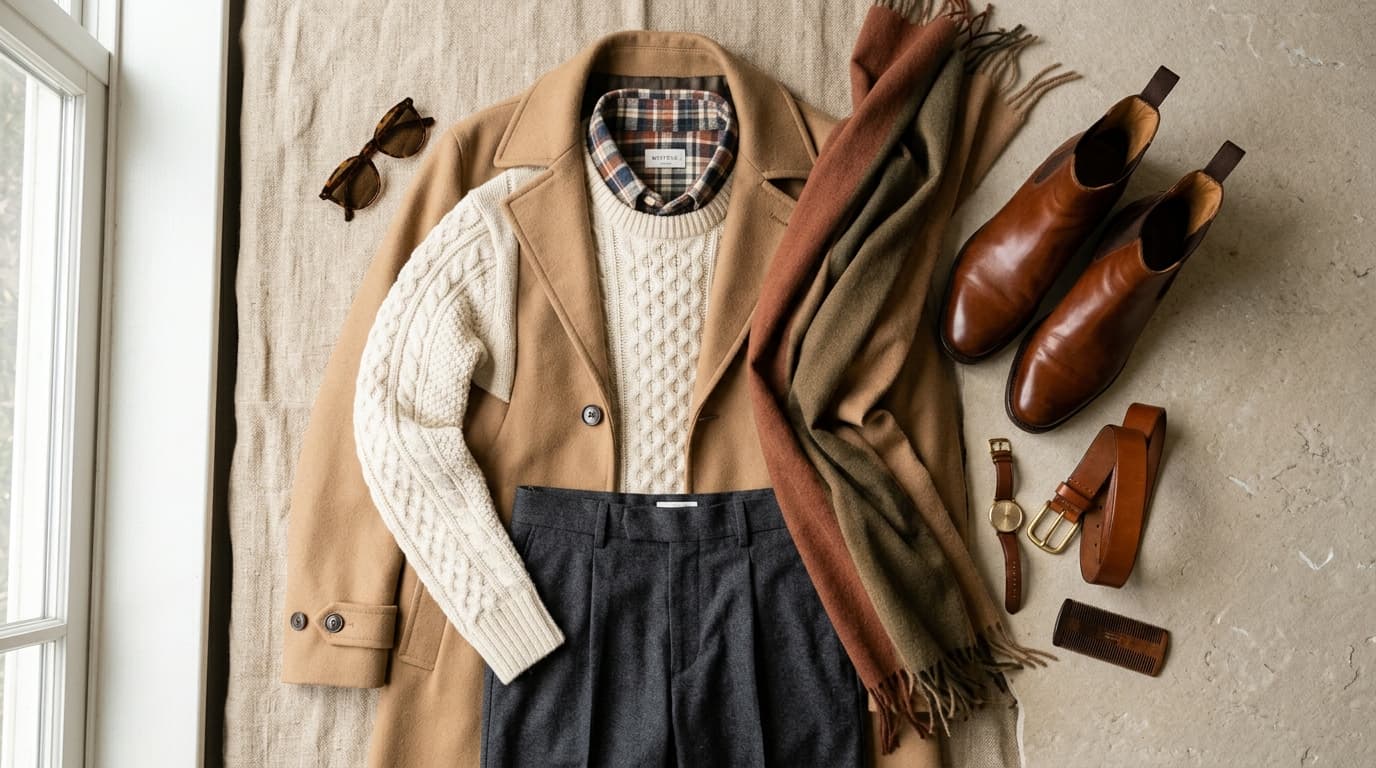
Layering is the skill fall actually requires. Get it right and a dozen garments cover the whole season. Get it wrong and you are either cold, overheated, or wearing something that makes you look twice your width.
Most layering advice stops at "wear more clothes." The useful part is the order, the fit, and the fabric choices that decide whether three layers keep you warm or just make you bulky.
This guide covers what each layer is for, a step-by-step process for building one, layered outfits by occasion, and the specific adjustments that keep layers from adding visual weight.
TL;DR
Layer in three functional stages, base, mid, and outer, going thin to thick from the inside out. Warmth comes largely from still air trapped within and between layers, so avoid compressing them. Vary your hem lengths and keep one layer fitted to avoid looking bulky. Slidez lets you try layered looks on virtually to check how they sit on your own body.
Why Layering Is Essential for Fall Weather
Layering works because trapped still air provides a substantial portion of insulation alongside the fabric, meaning several adjustable layers outperform one fixed garment.
This is the mechanism worth understanding, because it explains every layering rule that follows. Much of the insulation in lofty clothing comes from air held within its structure. Compressing those layers can reduce their insulating ability, so leave enough room for insulating garments to retain their loft, as textile testing in the AUTEX Research Journal illustrates. More space is not always warmer, either: one laboratory study published in the International Journal of Biometeorology found the lowest heat loss around 5–10 mm in ventilated configurations, while larger sealed gaps reached a plateau.
Once you know that, two things follow. More layers create more air boundaries, which is why layering beats a single thick garment. And keeping layers appropriately fitted rather than compressed preserves the air volume needed to keep you warm.
What layering gives you that a single garment cannot:
- Adjustability: you can remove one piece as the day warms, which a single coat does not allow
- More trapped air: each additional layer adds another insulating boundary
- Separated functions: moisture management, warmth, and wind protection can each be handled by the right fabric
- More outfits: three tops and two jackets produce far more looks than five standalone pieces
The adjustability matters most in fall specifically, because the gap between the morning and afternoon temperature is wide enough that one outfit has to work across a real range.
For dressing around that daily temperature swing, see our guide on what to wear in autumn for changing weather.
The Essential Clothing Pieces for Fall Layering
A layering wardrobe needs one good piece in each functional role, not many pieces in the same role.
Base layers (moisture management)
The base layer's main job is moving moisture away from your skin. This matters more than its warmth, because damp fabric against skin pulls heat away fast.
- Merino wool long-sleeve: the best general base layer, moves moisture and resists odor
- Synthetic technical base layers: cheaper, dry faster, less comfortable against skin for some people
- Fitted cotton tees: fine indoors or in dry conditions, poor once you sweat or get caught in rain
- Turtlenecks and mock necks: add warmth at the neck without adding bulk anywhere else
Mid layers (insulation)
The mid layer traps air. It is the piece you add or remove to change how warm the system is.
- Merino or lambswool knits: warmth for their thickness, and they layer without bulk
- Fleece: very warm for its weight, casual in appearance
- Cardigans and open knits: easier to remove and adjust than a pullover
- Flannel shirts and overshirts: light insulation plus texture, and they work as a top on their own
- Quilted or down vests: warmth through the core without bulking out the arms, which is useful under a jacket
Outer layers (wind and weather)
The outer layer protects the layers beneath. A wind-resistant outer layer can help preserve insulation by limiting air penetration. In one laboratory test published in Safety and Health at Work, at 16 km/h airflow, an impermeable covering increased an insulation assembly’s thermal resistance from 1.13 to 5.44 clo by preventing moving air from stripping away the trapped warm air that everything else depends on.
- Trench and field jackets: mid-weight, cover most of fall
- Denim and leather jackets: casual, structured, little insulation of their own
- Wool overcoats: warm and formal, better late in the season
- Waxed or technical shells: the right choice when rain is likely
Accessories as layers
- Scarves: the neck loses heat quickly, so a scarf is a large warmth change for very little bulk
- Hats and gloves: extremities first, and both pack away easily
- Tights and thermal bottoms: the layer most people forget, and the one that extends skirts and dresses furthest
How to Layer Clothes for Fall Step by Step
Build from the skin outward, checking fit at each stage before adding the next layer.
The order matters because each layer constrains the one above it. A mistake at the base cannot be fixed by the jacket.
Step 1: Start with a thin, fitted base.
Choose something that follows your body without compressing it. The base sets the silhouette for everything above, and bulk here multiplies through the whole outfit.
Step 2: Check the base works alone.
If the mid layer comes off at lunch, the base becomes your outfit. A base layer that only looks right underneath something has cost you the ability to adjust.
Step 3: Add the mid layer and check the shoulders.
The shoulder is where layering failures show first. If the seam sits off-position or the shoulder looks rounded, the mid layer is too heavy for what goes over it.
Step 4: Add the outer layer and check the arms.
Raise your arms. If the whole outfit lifts with them or the sleeves bind, the system is too tight and is compressing the air it needs to work.
Step 5: Set your hem lengths.
Each layer should end at a different point. A base below the mid layer, a jacket longer than both, or a deliberate reverse of that. Matching hems create one solid block with no visible structure.
Step 6: Order your sleeves.
Each successive layer should end at or before the one beneath it. A sweater sleeve swallowing a shirt cuff reads as a sizing mistake rather than a choice.
Step 7: Add the neck last.
Scarf, collar, or neither. This is the final adjustment and the easiest to change during the day, so leave it flexible.
A quick final check: can you remove exactly one piece and still have a complete outfit? If not, the system is decorative rather than functional.
Fall Layered Outfit Ideas for Different Occasions
The same three-layer structure works everywhere; the formality comes from which pieces fill the roles.
Casual and everyday
- Fitted tee, flannel shirt, denim jacket, straight jeans, ankle boots. Three textures, two removable layers.
- Long-sleeve base, chunky cardigan, straight jeans, boots. The cardigan is the adjustable piece.
- Henley, quilted vest, field jacket, chinos. The vest adds core warmth without arm bulk.
- Turtleneck, oversized shirt worn open, jeans, sneakers. Light layering for mild days.
Work and professional
- Fine knit over a collared shirt, tailored trousers, overcoat. Collar and cuffs showing is the detail that makes it read deliberate.
- Base layer, quarter-zip or mock neck, blazer, wool trousers. Blazer-compatible layering means keeping the mid layer thin.
- Knit dress, opaque tights, tailored coat, boots. One decision, appropriate for most offices.
- Shirt, sleeveless knit vest, blazer. The classic way to add warmth without breaking a jacket's line.
Evening and dressier occasions
- Silky or fine-knit top, structured jacket, dark trousers or dark denim, heeled boots. Contrast between soft and structured.
- Dress with tights and a tailored wool coat. The coat choice is what separates dressy from casual.
- Monochrome layers in one color family, which reads intentional and photographs well.
Cold and wet days
- Merino base, fleece or wool mid, waterproof shell, boots with grip. Function first, and the shell handles both wind and rain.
- Thermal base under regular clothes, with a packable rain layer. Keeps the outfit normal and the weather handled separately.
For more complete outfit formulas by season, see our guides on fall outfits for women and fall outfits for men.
How to Layer Clothes Without Looking Bulky
Bulk comes from layers that are too thick, too loose, or ending at the same point, and the fix is usually fabric choice rather than fewer layers.
This is the section most people actually need. Warmth and bulk are not the same problem, and solving one badly creates the other.
Choose warmth-per-thickness, not thickness. Merino, down, and technical fleece give far more insulation per millimeter than bulky acrylic knits. Two thin merino layers are warmer and slimmer than one thick cheap sweater.
Keep at least one layer fitted. If every layer is loose, the outfit has no defined shape. Usually the base should follow the body, which gives the eye a line to read even under volume.
Vary your hem lengths deliberately. Layers ending together make a solid rectangle. Staggering them creates visible structure and breaks up the mass.
Define the waist. A belt over a cardigan or coat, or a front tuck at the base layer, restores a waistline that layers otherwise hide. This is the single most effective anti-bulk adjustment.
Put volume on one half only. Voluminous layers on top pair with slim bottoms, and vice versa. Volume on both halves at once is what reads genuinely bulky.
Watch the shoulders and the arms. Bulk at the shoulder is the most visible kind, because it widens your outline at the top. Vests and thin mid layers solve this where a chunky sweater does not.
Do not size up to fit layers underneath. An oversized jacket over layers looks larger than the layers alone would. Choose mid layers thin enough for your actual jacket size instead.
Avoid compressing your layers. This matters for warmth as well as looks. Squeezing layers together removes the trapped air doing the insulating, so an overtight system is both tighter looking and colder than a correctly fitted one.
Use color to slim the stack. Keeping layers in one color family or in darker tones reduces how many visual breaks the eye registers, which makes three layers read as one outfit.
For the fit principles underneath all of this, see our guide on how to choose clothes by fit, fabric, and silhouette.
Best Shoes and Accessories for Fall Layered Outfits
Footwear should balance the visual weight that layers add on top, which usually means a shoe with some substance to it.
Boots anchor a layered outfit. Ankle boots are the most versatile. When you are wearing three layers up top, a thin-soled flat can make the proportions look top-heavy, and a boot with some sole corrects that.
Tall boots work with skirts and dresses. They also add a warmth layer to the lower leg, which is where most layered outfits are weakest.
Leather sneakers keep casual layering light. Useful when the layers are already heavy and you do not want the whole outfit to feel like winter.
Accessories that pull their weight:
- A scarf: the biggest warmth gain for the least bulk, and the fastest thing to remove
- A belt: the most effective tool for restoring a waist under layers
- A bag with room for a layer: the practical requirement that makes removing a mid layer possible
- A hat: meaningful warmth, and a useful focal point when the outfit is otherwise plain
- Gloves: easy to carry before you need them
The accessory rule under layering: pick one to be noticeable. A layered outfit already has a lot of visual information in it, so several competing accessories tip it into clutter.
How AI Can Help You Build Layered Fall Outfits
Layered outfits are the hardest thing to picture before wearing, because the variables multiply with every piece you add.
Whether a knit sits cleanly under a jacket, or whether a coat length works over a particular skirt, is nearly impossible to judge from separate product photos.
Slidez lets you try layered looks on virtually, on your own body. Its AI stylist analyzes your body type from your photo automatically, so the proportions it suggests account for your actual frame rather than a model's.
Where this helps with layering specifically:
- Checking bulk before buying: whether a mid layer works under outerwear you already own
- Testing proportions: hem and coat lengths against each other
- Building from inspiration: import a layered look from Pinterest or Instagram and try the pieces on
- Shopping across stores: the Chrome extension works on any online store, useful when layering pieces come from different brands
Looks save and sync between phone and desktop, so you can plan a set of layered outfits in one sitting instead of rebuilding them each morning.
Conclusion
Layering is a system, not a pile. Base layer for moisture, mid layer for warmth, outer layer for wind, each thin enough that the next one fits over it cleanly.
The bulk problem is almost always solved by better fabric rather than fewer layers. Choose warmth-per-thickness, keep one layer fitted, stagger your hems, and define the waist.
Slidez handles the part that is hardest to predict. Try layered looks on virtually, see how the stack sits on your own body, and check a new piece against your existing layers before buying. The free version includes all core features.
Ready to build better fall layers? 👉 Download Slidez free.
Frequently Asked Questions (FAQs)
How do you layer clothes for fall?
Build three functional layers from the inside out: a thin fitted base that manages moisture, a mid layer like a knit or cardigan for warmth, and an outer layer that blocks wind.
Go thin to thick, check the shoulders after adding each layer, and stagger your hem lengths so they do not all end at the same point. Slidez can show you how a layered combination looks on your own body before you buy any of it.
What are the best clothes for layering in fall?
Choose pieces with high warmth relative to their thickness. Merino and lambswool knits, technical fleece, and quilted vests all insulate well without adding much bulk.
Cardigans and open knits are more useful than pullovers because they can be half-opened or removed easily, and a vest adds core warmth without widening your shoulders or arms.
What should you wear as a base layer in fall?
A thin, fitted merino wool long-sleeve is the best general option, since it moves moisture away from your skin and keeps insulating when slightly damp.
Synthetic technical base layers dry faster and cost less. Cotton works indoors in dry conditions but performs poorly once damp, because wet fabric against skin pulls heat away quickly.
How do you layer clothes without looking bulky?
Fix it with fabric rather than by removing layers. Two thin merino layers are both warmer and slimmer than one thick acrylic sweater.
Keep at least one layer fitted so the outfit has a defined line, stagger your hem lengths, define the waist with a belt or a front tuck, and put volume on only one half of your body. Avoid sizing up your jacket to fit bulky layers underneath.
What jackets are best for fall layering?
Mid-weight jackets cover the most of the season: a trench, field jacket, or chore coat. Denim and leather jackets add structure and wind protection with little insulation of their own, which makes them good over a warm mid layer.
A wool overcoat suits late fall and dressier occasions, and a waxed or technical shell is the right choice when rain is likely. Choose the jacket to fit your intended mid layer, not the other way around.
How do you layer clothes for changing fall temperatures?
Make the middle layer the one that comes off, and choose it for how easily it folds into a bag. Your base and outer layer stay on, so the mid layer is doing all the adjusting.
Keep the base layer presentable on its own, since it becomes your whole outfit once the mid layer is removed. A scarf is the fastest small adjustment available and takes almost no space when removed.
Can AI help me create stylish layered outfits for fall?
Yes, and layering is where it helps most, since bulk and proportion are difficult to judge until every layer is on at once.
Slidez lets you try layered fall looks on virtually and factors your body type into recommendations automatically, so you can check whether a knit works under a jacket before buying either piece.
Ready to see your layers on yourself first? 👉 Download Slidez free.
References
- How High-Loft Textile Thermal Insulation Properties Depend on Compressibility, Glombíková et al., AUTEX Research Journal, September 2020
- Impact of garment construction and environmental factors on heat transfer, International Journal of Biometeorology, April 2025
- Thermal Insulation of Protective Clothing Materials in Extreme Cold Conditions, Hallé et al., Safety and Health at Work, March 2023
- The effect of wind, body movement and garment adjustments on the effective thermal resistance of clothing with low and high air permeability insulation, Morrissey and Rossi, Textile Research Journal, 2014