
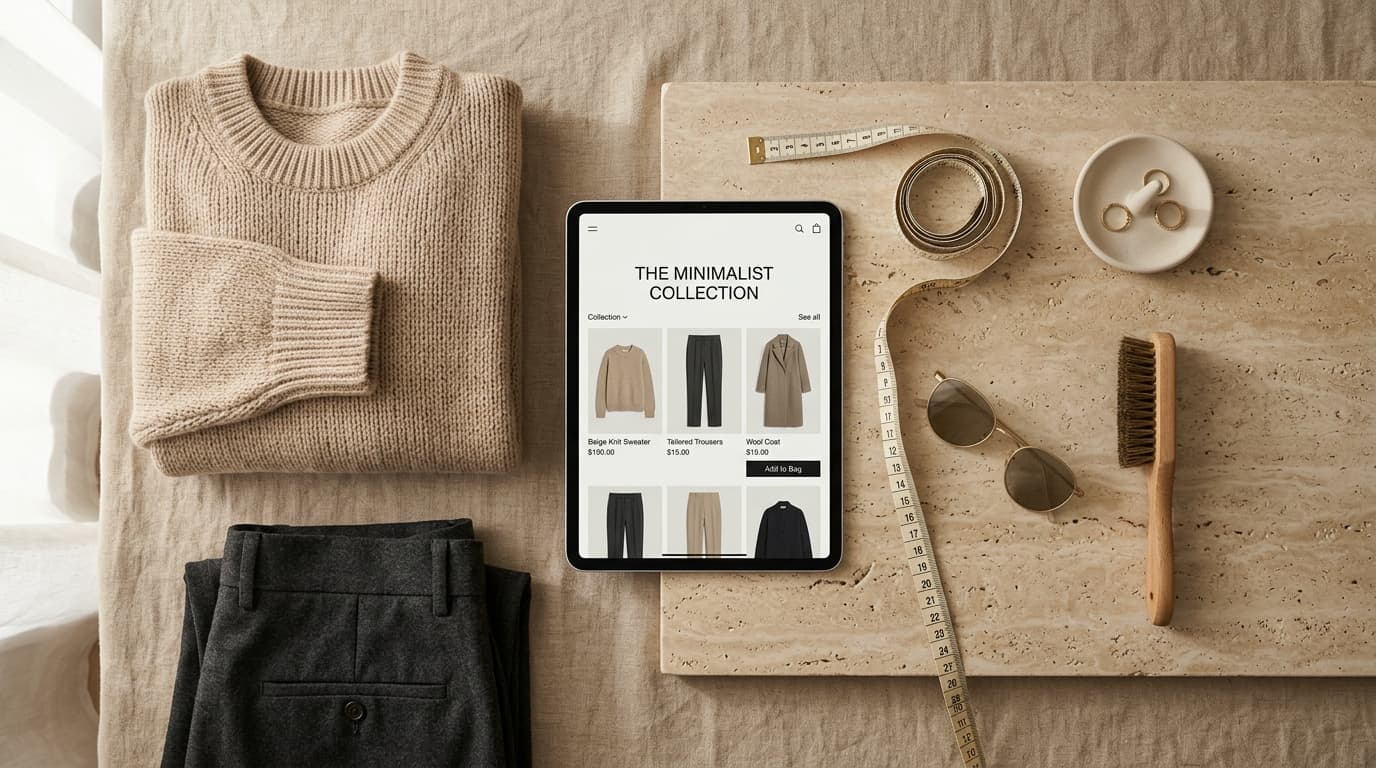
Online clothing shopping fails in a specific way. The item arrives, it technically fits, and it still feels wrong on you.
That gap between the product photo and the mirror is not bad luck. It comes from buying on a flat image with no reliable size standard behind it and no way to see the piece on your own body.
This guide walks the purchase from listing to checkout: how to read a product page properly, how to size without guessing, how to check the piece against your actual style, and how to see it on yourself before you pay.
TL;DR
Shop online well by reading the product page in detail, checking flat measurements instead of trusting the size label, confirming the piece matches clothes you already own, and visualizing it on yourself before buying. Slidez lets you try items on virtually from any online store, so you see the piece on your body before it ships.
Why Online Clothing Shopping Can Be Difficult
Online shopping removes the two checks that make in-store buying reliable: trying the piece on, and seeing it in ordinary light on your own body.
Everything else about a listing is designed to sell. Professional lighting, a styled model, and a garment pinned at the back all present the item at its best, which sets an expectation the delivered piece rarely meets.
The result shows up in return data. Coresight Research estimated that 24.4% of US online apparel orders were returned during the 12 months ending March 2023. In its survey of 100 apparel brand and retailer decision-makers, 53% identified size and fit as the leading reason for returns.
Fit is only part of it. A piece can match your measurements exactly and still be returned because the proportion, fabric weight, or color reads differently on you than it did on the model.
The three things a product photo cannot tell you:
- How the fabric actually behaves: whether it drapes, clings, holds structure, or wrinkles after an hour of wear
- How the proportion sits on your frame: a hemline or waistline lands differently on a 5'10" model than on most buyers
- How the color works against your skin: screen calibration and studio lighting both shift color meaningfully
For a deeper comparison of the two shopping methods, see our guide on virtual try-on vs online shopping.
How to Know What Size to Buy When Shopping Online
Ignore the size label and buy from the garment's flat measurements instead, compared against a piece you already own that fits the way you want.
Size labels are not consistent across brands, so your usual size is only a starting point. As explained in analysis by True Fit, fabric, cut, and intended silhouette can also change how a garment fits, even when its listed measurements look similar (a finding supported by a Vogue Business sizing survey, where 91% of respondents reported that their clothing size depended on the brand).
This is why defaulting to "I'm usually a medium" is the single most common sizing mistake online. Your usual size is a fact about brands you already own, not about the brand you are buying from now.
A reliable sizing process:
- Find a garment you already own that fits the way you want this one to fit. Same category: a shirt for a shirt, trousers for trousers.
- Measure it flat, not your body. Chest or waist width across the garment laid flat, plus total length.
- Compare against the listing's garment measurements, not its body measurement chart. Those are two different numbers and brands rarely label which one they are showing.
- Check the fabric composition for stretch. Anything with 2% or more elastane has give; rigid cotton or linen does not.
- Read reviews for fit direction. Consistent "runs small" or "runs large" comments from several reviewers are more useful than any chart.
If the listing only gives body measurements and no garment measurements, treat it as a higher-risk purchase and check the return window before ordering.
For the full measuring method and how sizes differ by country, see our guide on how to read a clothing size chart.
How to Check Fit, Fabric, and Clothing Details
Read the specification section rather than the marketing description, and treat fabric composition, model reference, and review photos as the three most informative parts of any listing.
Most of the information you need to avoid a bad purchase is on the page already. It is just below the fold and written in smaller type than the sales copy.
Fabric composition tells you how the piece will wear. Natural fibers like cotton, wool, and linen breathe but wrinkle. Polyester holds shape and resists creasing but traps heat. A blend usually splits the difference, and the percentages tell you which way it leans.
The model reference line is the proportion key. Good listings state the model's height and the size they are wearing. If the model is 5'11" in a size S and you are 5'4", the hemline in the photo will sit several inches lower on you.
Customer review photos provide a grounded perspective on the product. They show the piece in ordinary lighting, on ordinary bodies, after ordinary wear. Research on customer-generated product images in Information Systems Research found that they can raise expectations and lead to lower subsequent product ratings when those expectations are not met, with highly aesthetic images intensifying the effect.
Care instructions are a cost signal. Dry-clean-only on a frequently worn item means recurring expense. Hand-wash on something you will wear weekly usually means it gets worn less than you planned.
A quick listing checklist before adding to cart:
- Fabric composition listed, with stretch percentage if any
- Garment measurements given, not only body measurements
- Model height and size worn stated
- At least a few customer photos, not just studio shots
- Return window and return cost clearly stated
For how fit, fabric, and silhouette work together on your body specifically, see our guide on how to choose clothes by fit, fabric, and silhouette.
How to Choose Clothes That Match Your Style
Check a potential purchase against the clothes you already own and wear, not against how good it looks on its own.
A piece that does not pair with at least three things in your wardrobe will mostly sit unworn, no matter how well it fits. This is the difference between buying a garment and buying an outfit.
The three-outfit test. Before buying, name three complete outfits you could build from pieces you already own. If you cannot get to three without buying something else, the item is a bigger commitment than it looks.
Check it against what you actually wear, not what you aspire to. The most reliable signal is the five to ten pieces you reach for most often. New purchases that share their color family, formality, and fit tend to get worn; ones that do not tend to stay on the hanger.
Watch the formality gap. A piece that is one step dressier than everything else you own has nothing to pair with. It reads as a mistake not because it is wrong, but because it is isolated.
Be honest about the occasion. Buying for an imagined version of your life, rather than the weeks you actually have, is how closets fill up with items that were never going to be worn.
For more on avoiding purchases that go unworn, see our guide on how to stop buying clothes you never wear.
How to Visualize Clothes Before Buying Online
Virtual try-on closes the gap a product photo leaves open by rendering the garment on your own body instead of on a model.
This is the step that removes the most guesswork, because it answers the questions a listing cannot: how the proportion lands on your frame, how the color sits against your skin, and whether the piece works with what you already own.
The effect is measurable. In findings shared by Zalando Corporate Newsroom, pilots of its virtual fitting room technology reduced return rates by up to 40% in denim, historically one of the hardest categories to size online.
Slidez approaches this from the shopping side rather than the wardrobe side. Its Chrome extension lets you try on items from any online store you are already browsing, and its AI stylist analyzes your body type from your photo automatically, so recommendations account for your frame without a quiz or calculator.
What visualizing before buying actually catches:
- Proportion problems: a hemline, rise, or sleeve length that works on the model and not on you
- Color mismatches: a shade that looks right on screen but drains your complexion
- Coordination gaps: a piece that does not sit well with anything already in your rotation
- Silhouette surprises: volume or structure that reads differently on your body shape
You can also save looks and sync them across phone and desktop, which makes it easier to compare options before committing rather than deciding in a single session.
For more on testing pieces before purchase, see our guide on how to style new clothes before you buy them online.
Common Online Clothing Shopping Mistakes to Avoid
A handful of recurring habits account for most disappointing online purchases.
Buying on the photo alone. The image is the most persuasive and least informative part of a listing. The specification section is where the useful detail lives.
Ordering your usual size without checking. Sizing is brand-specific. The label is a guess until you compare it against garment measurements.
Ordering multiple sizes by default. Bracketing feels like risk management, but it encourages buying without checking, and the return step often gets delayed past the window.
Shopping directly from a social feed. Items that look good in a styled video are being sold on the styling, not the garment. Pull the listing up separately and read it properly.
Ignoring the return policy before buying. Return window length, return shipping cost, and whether refunds come as store credit all change how much risk a purchase carries.
Buying for an occasion that has not happened yet. Event-specific purchases made far in advance are among the most frequently unworn items in a wardrobe.
Skipping the coordination check. A piece bought in isolation usually stays in isolation.
Conclusion
Shopping for clothes online works when you treat the listing as a document to read rather than an image to react to.
Check garment measurements against something you already own, read the fabric composition and model reference, confirm the piece coordinates with your existing wardrobe, and see it on yourself before paying.
Slidez handles the last step directly. Try items on virtually from any online store through the Chrome extension, see how the piece reads on your own body, and confirm it works with what you already own before the order goes through. The free version includes all core features.
Ready to see clothes on yourself before you buy? 👉 Download Slidez free.
Ready to see clothes on yourself before buying?
Download Slidez free and try on items from any store while you browse.
Download Free ExtensionFrequently Asked Questions (FAQs)
How do I shop for clothes online successfully?
Read the product page properly rather than buying on the photo. Check the fabric composition, the garment's flat measurements, the model's height and size worn, and customer review photos before adding anything to your cart.
Then check the piece against your existing wardrobe by naming three outfits you could build with things you already own. Tools like Slidez add a final step by letting you see the item on your own body before you commit.
How do I know what size to buy online?
Do not rely on your usual size. Size labels are not consistent across brands, so your usual size is only a starting point. Instead, measure a garment you already own that fits well and compare those flat measurements to the listing's garment measurements.
Also check the fabric composition for stretch and scan reviews for consistent "runs small" or "runs large" feedback, which is often more reliable than the brand's own chart.
How can I tell if clothes will fit when shopping online?
Compare garment measurements rather than body measurements, since brands rarely label which one their chart shows. A piece you already own is a better reference point than a tape measure around your body.
Virtual try-on goes further by rendering the item on your own frame, which catches proportion issues like hemline and rise that measurements alone do not reveal.
What should I check before buying clothes online?
Check five things: fabric composition with stretch percentage, garment measurements, the model's height and size worn, customer review photos, and the return window with its shipping cost.
If a listing is missing garment measurements or has no customer photos, treat it as a higher-risk purchase and make sure the return terms are workable before ordering.
How do I know if an outfit matches my style?
Look at the five to ten pieces you reach for most often and note what they share in color, formality, fit, and fabric. New purchases that fit those patterns get worn; ones that sit outside them usually do not.
Apply the three-outfit test as a practical check: if you cannot name three complete outfits using things you already own, the piece is a larger commitment than it appears.
How can I avoid buying clothes I won't wear?
Check coordination before you check the price. A piece that pairs with at least three things already in your wardrobe will get worn far more often than one bought in isolation, regardless of how well it fits.
Be cautious with purchases made for an imagined lifestyle or a distant occasion, since those are among the most commonly unworn items in a closet.
Can AI help me choose clothes when shopping online?
Yes. AI styling tools can account for your body type, suggest pieces that coordinate with what you already own, and render a garment on your own body before you buy.
Slidez does this from the shopping side specifically. Its Chrome extension works on any online store, and its AI stylist factors your body type into recommendations automatically, with no quiz or measurements required.
Ready to stop guessing at checkout? 👉 Download Slidez free.
References
- The True Cost of Apparel Returns: Alarming Return Rates Require Loss-Minimization Solutions, Coresight Research, April 4, 2023
- How Fit Finder Tools Work (And What Separates Good From Bad), Romney Evans, True Fit, May 6, 2026
- The Editor's Cut: A Full Data Breakdown From the Vogue Business Consumer Sizing Survey, Maliha Shoaib and Lucy Maguire, Vogue Business, October 13, 2025
- When Images Backfire: The Effect of Customer-Generated Images on Product Rating Dynamics, Guan et al., Information Systems Research, Vol. 34, No. 4, December 2023
- Rewriting the Rules of Fit in Europe: 3 Key Takeaways from CPHFW AW26, Zalando Corporate Newsroom, February 2, 2026