
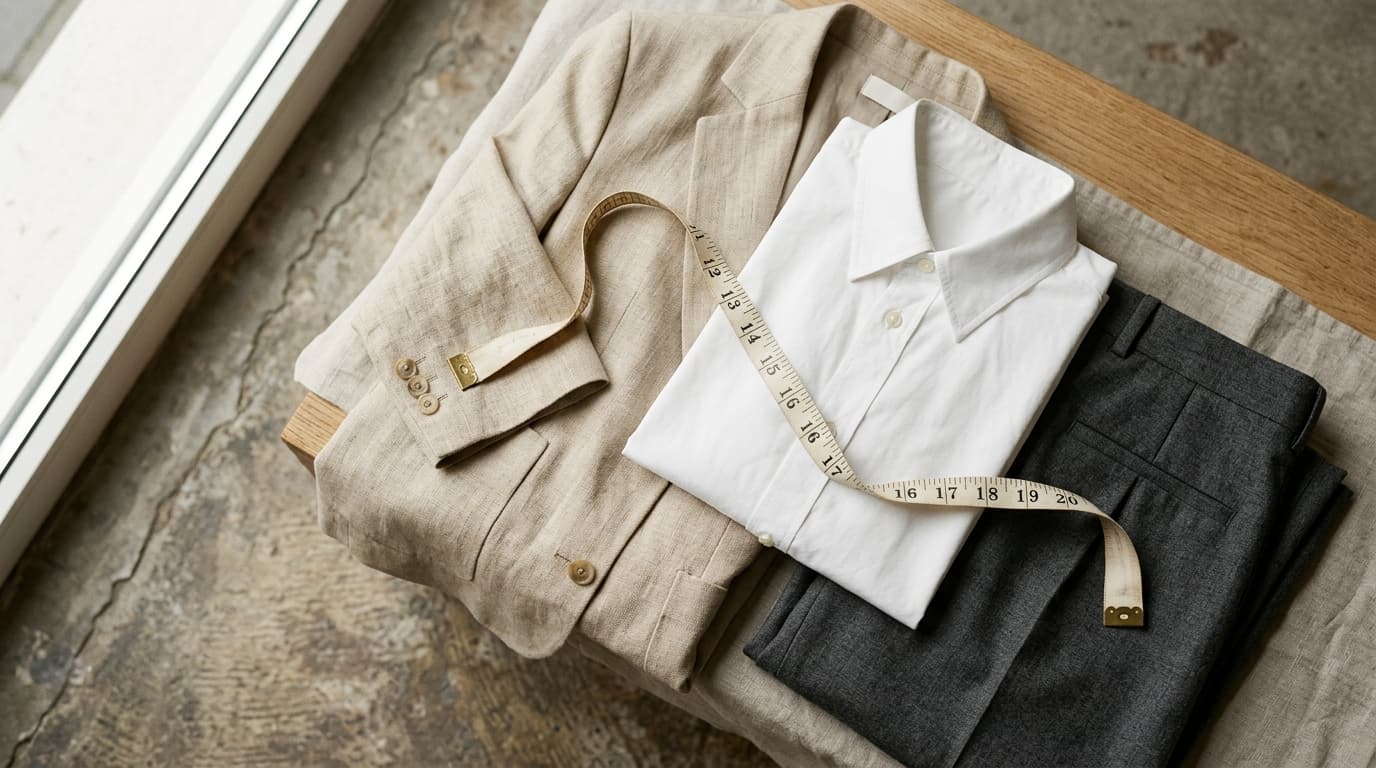
A size chart is the closest thing online shopping has to trying something on, and most people skip it entirely. They pick their usual letter size and hope.
That gamble is why sizing is the single biggest cause of online returns. A size chart, read properly, fixes most of it.
This guide covers how to measure yourself accurately, how to read a chart correctly, and the mistakes that undo the whole process even when the measuring was done right.
⚡ TL;DR
To use a clothing size chart correctly, measure your body accurately, match those numbers to the brand's specific chart rather than your usual letter size, and check the fit type. Sizes vary significantly between brands, so this process matters every time you shop somewhere new. Slidez adds a further check: virtual try-on shows you the actual fit on your body before you buy.
What Is a Clothing Size Chart?
A clothing size chart is a table of body measurements that a brand maps to its size labels, letting you match your actual measurements to a size rather than guessing from a letter alone.
Every brand builds its own chart, based on its own fit model and manufacturing standards. That is the entire reason a size chart matters: “Medium” is not a fixed, universal measurement. It is whatever a specific brand decided Medium means.
A size chart usually lists measurements for chest or bust, waist, hips, and sometimes inseam or shoulder width, against a range of size labels. Reading it correctly means matching your body's actual numbers to those ranges, not matching the label you normally buy.
How to Measure Yourself for the Right Clothing Size
Accurate self-measurement is the foundation everything else depends on. A few minutes with a soft measuring tape prevents most sizing mistakes.
Chest or Bust
Wrap the tape around the fullest part of your chest, under your arms and across your shoulder blades, keeping it level and snug but not tight.
Waist
Measure around your natural waistline, generally the narrowest point of your torso, not where your trousers currently sit.
Hips
Measure around the fullest part of your hips and seat, keeping the tape level all the way around.
Inseam
Measure from the crotch to the ankle bone along the inside of the leg, using a well-fitting pair of trousers as a reference if easier.
Shoulder Width
Measure from the edge of one shoulder to the other across the back, especially useful for jackets and structured tops.
Key Tips for Measurement Accuracy:
- Measure in your underwear or close-fitting clothing.
- Keep the tape parallel to the floor at every point.
- Do not pull it tight enough to compress skin, and do not leave it loose enough to sag.
- Measuring with a second person helps, particularly for shoulder width and back measurements you cannot easily see yourself.
How to Match Your Measurements to a Size Chart
Once you have accurate numbers, matching them correctly is its own skill.
Find the brand's specific chart, not a generic one
Every retailer publishes its own, usually linked from the product page. A generic “size chart” found through a search engine will not reflect that brand's actual measurements.
Match to your largest relevant measurement
If your waist falls in one size range and your hips fall in the next size up, generally size for the hips, since a tight hip fit is harder to live with than slight excess at the waist.
Check for a size range, not a single number
Most charts list a range for each size. If you sit between two sizes, note the following section on fit type before deciding.
Look for a separate fit or body-type note
Some brands publish different charts for “regular,” “petite,” or “tall” cuts, which matters as much as the base measurement.
Recheck for every new brand
A size that matches your measurements at one retailer will not automatically match at another. This is the step most people skip, and it is the one that causes most of the ordering errors. True Fit describes this “usual size” assumption as a primary trap for online shoppers, since a consumer who wears a medium in one brand may easily need a large in another due to different fabric cuts and silhouettes.
How Clothing Sizes Differ Between Brands and Countries
Sizing inconsistency is not an accident of poor charts. It is a structural fact of the apparel industry.
There is no universal sizing standard. A given label, whether a number or a letter, can vary meaningfully between brands, and even between different collections from the same brand. Research published in the Journal of Fashion Marketing and Management confirms that no universal clothing size standard exists, and that “vanity sizing,” where brands alter measurement specifications so shoppers fit into smaller labeled sizes, makes size labels effectively arbitrary from one store to the next.
International sizing systems do not align directly. US, UK, EU, and Asian sizing all use different numbering systems, and the differences are not a simple fixed offset across every brand.
Rough General International Sizing Guide (Verify against specific retailer chart):
| US Size | UK Size | EU Size |
|---|---|---|
| 0 | 4 | 32 |
| 2 | 6 | 34 |
| 4 | 8 | 36 |
| 6 | 10 | 38 |
| 8 | 12 | 40 |
| 10 | 14 | 42 |
This table is a starting reference only. Always confirm against the specific retailer's own chart, since actual measurements at each size point vary by brand.
Vanity sizing complicates things further. Some brands run larger against their stated size to create a flattering psychological effect, which is part of why the same body can measure a size 8 in one brand and a size 12 in another.
Because of this variation, treating your “usual size” as portable across brands is one of the most reliable ways to order the wrong fit.
How to Choose the Right Size Based on Clothing Fit
Measurements tell you the size. Fit type tells you whether that size will feel right.
Check the garment's intended fit
Slim, regular, relaxed, and oversized all describe how much ease is built in beyond your actual measurements. The same numerical size can feel completely different depending on this.
Read fabric composition
Fabrics with stretch, spandex, elastane, or a knit construction, are more forgiving of a borderline measurement than rigid woven fabrics like denim or structured cotton.
Consider the garment category
Fitted categories like tailored blazers and structured dresses punish sizing mistakes more than relaxed categories like knitwear or loungewear.
When between two sizes, size for the fit you want
Sizing up generally suits a relaxed or oversized look. Sizing down generally suits a fitted, tailored look, assuming the fabric has some stretch to accommodate it.
Use reviews when available
Customer reviews mentioning “runs small” or “true to size” are a useful supplementary signal alongside the chart itself.
Even with a perfect measurement match, fit type is often the deciding factor in whether a garment feels right once worn.
Common Clothing Size Chart Mistakes to Avoid
A handful of repeated mistakes account for most sizing-related returns.
Relying on your usual letter size
Assuming “Medium” means the same thing everywhere is the single most common mistake, and it is directly responsible for a large share of fit-related returns. Coresight Research found that size and fit issues are the undisputed leading cause of online clothing returns, driving 53% of all apparel send-backs, far ahead of colour mismatches or damage.
Measuring over bulky clothing
Measuring over a jumper or thick layers adds inches that were never really there.
Using an old measurement
Bodies change. A measurement from a year or more ago is not reliable for a current purchase.
Ignoring the chart entirely
Skipping the chart and guessing based on memory alone is how most avoidable sizing mistakes happen.
Not checking for regional chart differences
Some retailers show different charts depending on the site region you are browsing from, which can silently shift the numbers.
Assuming stretch fabric solves everything
Some give in fabric helps, but it has limits, and relying on it entirely still leads to mistakes on borderline sizes.
Skipping the visual check
Even a correctly matched size can look different than expected once worn. Seeing the fit before committing, whether physically or virtually, catches what a chart alone cannot. Zalando found that letting shoppers visually verify how a garment drapes on their specific body shape through virtual fitting room technology cut return rates by up to 40% in categories like denim, where return rates otherwise run especially high.
For more on why this matters, see our guide on how to style new clothes before you buy them online.
Conclusion
A clothing size chart, read carefully, solves most of the guesswork in online shopping. Measure accurately, match to the specific brand's chart rather than your usual size, and factor in the garment's intended fit before deciding.
Sizing will likely never be fully standardized across the industry, which makes this a skill worth having rather than a one-time task. Every new brand deserves its own check.
For the part a chart cannot cover — how a correctly sized garment will actually look on you — Slidez adds virtual try-on. Once you have the right size from the chart, you can see the fit on your own body before it ever arrives.
Ready to see the fit before you buy?
Stop guessing from size charts alone. Try on garments virtually and verify the fit before placing your order.
Download Slidez FreeFrequently Asked Questions (FAQs)
How do I read a clothing size chart?
Find the specific brand's chart on the product page, measure your chest or bust, waist, and hips accurately, then match those numbers to the size range that fits your measurements, rather than picking the letter size you normally buy. Also check whether the chart specifies a fit type, since regular, slim, and relaxed cuts can differ significantly even within the same labeled size.
How do I know what clothing size I am?
Measure your chest or bust, waist, and hips with a soft tape measure, then compare those numbers to the specific brand's size chart. There is no single universal size, so your size varies by retailer. If you sit between two sizes, consider sizing up for a relaxed fit or down for a fitted look, depending on the fabric's stretch.
What measurements do I need for a clothing size chart?
The core measurements are chest or bust, waist, and hips. For more precise fits, inseam (for trousers) and shoulder width (for jackets and structured tops) are also useful. Measure in close-fitting clothing, keep the tape level, and avoid pulling it too tight or leaving it too loose.
Should I size up or down when shopping online?
It depends on the garment's fit type and fabric. Size up if you sit between two sizes and want a relaxed or oversized look, or if the fabric has little to no stretch. Size down if you want a fitted look and the fabric includes stretch fibers like elastane. Customer reviews mentioning “runs small” or “runs large” are a useful additional signal alongside your measurements.
Why are clothing sizes different between brands?
Because there is no universal sizing standard in the apparel industry. Each brand builds its size chart around its own fit model and manufacturing choices, which is why the same numerical or letter size can vary meaningfully between retailers. This is also why checking the chart for every new brand matters, even if you know your size at stores you shop regularly.
How do I convert clothing sizes between countries?
General conversion charts (US, UK, EU) offer a rough starting point, but they are not exact across every brand. The safest approach is to check the specific retailer's own size chart rather than relying on a generic international conversion table. International sizing systems use different numbering logic entirely, so treat conversions as a starting estimate rather than a guarantee.
What should I do if I am between two clothing sizes?
Check the garment's fit type and fabric first. If it is a stretch fabric and you want a closer fit, size down. If it is rigid fabric or you prefer more ease, size up. Where possible, use virtual try-on to see how the size actually looks once selected. Slidez lets you check this directly before you commit to a purchase.
References
- How Fit Finder Tools Work, True Fit, 2024
- The Influence of Self-Construal on Consumer Responses to Sizing Discrepancy, Journal of Fashion Marketing and Management, 2023
- The True Cost of Apparel Returns: Alarming Return Rates Require Loss-Minimization Solutions, Coresight Research, March 2023
- Rewriting the Rules of Fit in Europe: 3 Key Takeaways from CPHFW AW26, Zalando Corporate Newsroom, February 2026
Recommended Readings
How to Style New Clothes Before You Buy Them Online
Avoid common shopping mistakes and use virtual try-on and AI to choose clothes you'll actually wear.
Virtual Try-On vs Online Shopping: What's Better?
Compare virtual try-on with traditional online shopping on fit accuracy, return rates, and shopping confidence.
How AI Helps You Find Clothes That Suit You
Discover how AI algorithms analyze cuts, silhouettes, and personal taste to match clothes to your body.
How to Stop Buying Clothes You Never Wear
Break the impulse buy cycle and build a wardrobe full of pieces you actually wear every single week.